
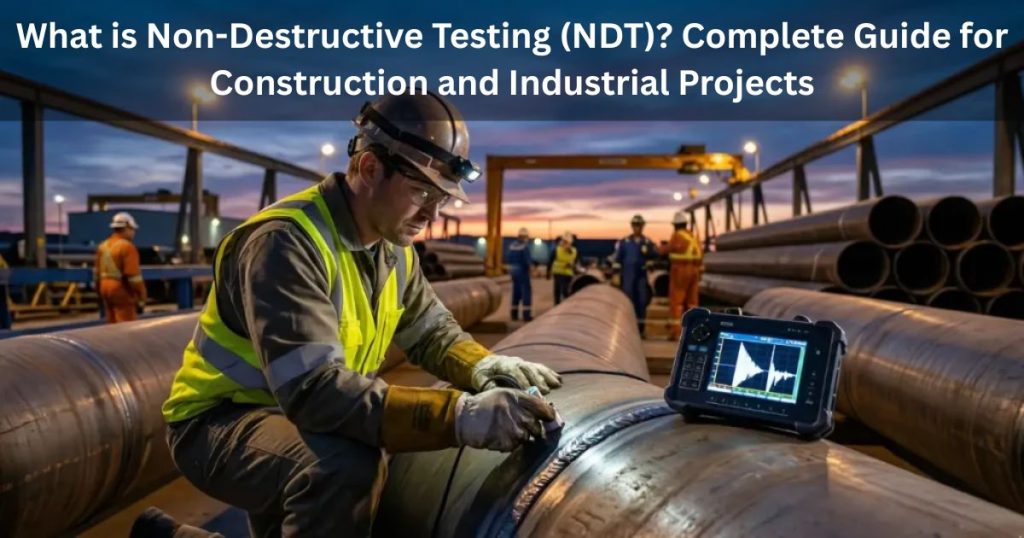
In modern construction, manufacturing, infrastructure, and industrial projects, ensuring the quality and safety of materials is essential. A small defect in a concrete structure, steel component, bridge, or industrial equipment can lead to costly repairs, operational failures, or safety risks. This is where Non-Destructive Testing (NDT) plays a crucial role.
Non-Destructive Testing (NDT) allows engineers and inspectors to evaluate the condition, strength, and integrity of materials without causing any damage to the tested component. Today, NDT testing has become a standard requirement in construction projects, industrial plants, bridges, pipelines, manufacturing facilities, and structural assessments.
This guide explains everything you need to know about NDT testing, its methods, applications, benefits, and how to choose the right Non-Destructive Testing Lab in India.
What is Non-Destructive Testing (NDT)?
Non-Destructive Testing (NDT) refers to a group of testing techniques used to inspect materials, structures, and components without altering or damaging them.
Unlike destructive testing, where a sample is broken or damaged to determine its properties, NDT enables engineers to identify defects while keeping the structure fully functional.
NDT testing helps detect:
- Cracks
- Voids and honeycombing
- Corrosion
- Weld defects
- Material discontinuities
- Thickness loss
- Structural weaknesses
As a result, organizations can ensure safety, maintain compliance, and reduce maintenance costs.
Why is NDT Testing Important?
NDT testing helps project owners and engineers identify hidden defects before they become major problems.
Key Benefits of NDT Testing
1. Improves Safety
NDT helps detect structural defects that could compromise the safety of buildings, bridges, pipelines, and industrial equipment.
2. Reduces Repair Costs
Early defect detection allows corrective action before failures occur, reducing expensive repairs and downtime.
3. Extends Asset Life
Regular inspections improve maintenance planning and increase the lifespan of structures and equipment.
4. Maintains Quality Standards
NDT ensures compliance with national and international quality standards for construction and industrial projects.
5. Non-Damaging Inspection
The tested component remains intact and operational after inspection.
Common NDT Testing Methods
Different NDT techniques are used depending on the material, structure, and inspection requirements.
Ultrasonic Testing (UT)
Ultrasonic Testing uses high-frequency sound waves to detect internal flaws and measure material thickness.
Applications:
- Steel structures
- Weld inspections
- Pressure vessels
- Bridges
- Industrial equipment
Rebound Hammer Test
This test evaluates the surface hardness and estimated compressive strength of concrete.
Applications:
- Buildings
- Bridges
- Concrete structures
Ultrasonic Pulse Velocity Test (UPV)
UPV testing assesses concrete quality by measuring the velocity of ultrasonic waves passing through concrete.
Applications:
- Structural audit projects
- Concrete quality assessment
- Structural stability evaluation
Radiographic Testing (RT)
Radiographic Testing uses X-rays or gamma rays to identify internal defects.
Applications:
- Weld inspection
- Metal fabrication
- Industrial manufacturing
Magnetic Particle Testing (MPT)
MPT detects surface and near-surface defects in ferromagnetic materials.
Applications:
- Steel components
- Weld joints
- Machinery parts
Dye Penetrant Testing (DPT)
DPT identifies surface-breaking defects using a visible or fluorescent dye.
Applications:
- Metal NDT testing
- Aerospace components
- Fabrication industries
Half-Cell Potential Test
This method evaluates the probability of corrosion in reinforced concrete structures.
Applications:
- Structural audit
- Building assessment
- Bridge inspection
Applications of NDT Testing in Construction Projects
Construction projects rely heavily on NDT testing to verify material quality and structural integrity.
Building Construction
NDT testing helps assess:
- Concrete quality
- Reinforcement condition
- Structural performance
- Construction defects
Structural Audit
A professional structural audit uses multiple NDT techniques to evaluate the health of existing structures.
Structural audits help determine:
- Structural safety
- Remaining service life
- Repair requirements
- Rehabilitation strategies
Structural Stability Test
A structural stability test assesses whether a structure can safely withstand expected loads and environmental conditions.
Engineers often recommend structural stability testing for:
- Commercial buildings
- Industrial facilities
- Residential complexes
- Educational institutions
Bridge Load Test and NDT Inspection
Bridges experience constant traffic loads, environmental stress, and material deterioration over time.
A bridge load test evaluates how a bridge performs under controlled loading conditions.
When combined with NDT testing, bridge load testing provides valuable information about:
- Structural capacity
- Deflection behavior
- Crack development
- Load distribution
- Long-term performance
Government agencies, infrastructure developers, and consultants often require bridge load testing before project approval or rehabilitation.
Metal NDT Testing: Ensuring Industrial Reliability
Metal components used in industrial facilities must meet strict quality standards.
Metal NDT testing helps identify manufacturing defects, fatigue cracks, corrosion damage, and welding issues before failures occur.
Industries that rely on metal NDT testing include:
- Oil and gas
- Power plants
- Automotive manufacturing
- Steel fabrication
- Aerospace
- Railways
Regular inspections help prevent accidents and improve operational reliability.
Non-Destructive Testing Lab India: Why Professional Testing Matters
Choosing a qualified Non-Destructive Testing Lab India is essential for obtaining accurate and reliable results.
A professional NDT laboratory offers:
- Advanced testing equipment
- Qualified engineers
- Standardized testing procedures
- Detailed technical reports
- Compliance with industry standards
Laboratories with experienced professionals can provide valuable recommendations for maintenance, repair, and structural improvements.
How to Choose the Best NDT Testing Lab in Delhi/NCR
Finding the Best NDT Testing Lab in Delhi/NCR requires careful evaluation.
Consider the Following Factors:
Experience and Expertise
Select a laboratory with extensive experience in construction, industrial, and infrastructure projects.
Qualified Engineers
Ensure that certified inspectors and trained engineers perform the testing.
Modern Equipment
Advanced testing equipment improves accuracy and reliability.
Comprehensive Services
A reliable laboratory should provide:
- NDT testing
- Structural audit
- Structural stability test
- Bridge load test
- Metal NDT testing
Detailed Reporting
Clear and professional reports help engineers and project owners make informed decisions.
Industries That Use NDT Testing
NDT testing supports a wide range of industries.
Construction Industry
- Residential buildings
- Commercial complexes
- High-rise structures
Infrastructure Sector
- Bridges
- Flyovers
- Highways
- Metro projects
Manufacturing Industry
- Fabrication units
- Machinery production
- Quality control facilities
Energy Sector
- Thermal power plants
- Solar projects
- Oil and gas facilities
Transportation Industry
- Railways
- Airports
- Ports
Future of Non-Destructive Testing
Technological advancements continue to improve NDT inspection capabilities.
Modern innovations include:
- Digital radiography
- Drone-based inspections
- Automated ultrasonic testing
- Artificial intelligence-based defect analysis
- Remote monitoring systems
These technologies improve inspection speed, accuracy, and efficiency while reducing operational risks.
Conclusion
Non-Destructive Testing (NDT) has become an essential part of modern construction and industrial quality assurance. From evaluating concrete structures and steel components to conducting structural audits, bridge load tests, and structural stability tests, NDT provides critical information without damaging the asset.
Organizations that invest in professional NDT testing benefit from improved safety, reduced maintenance costs, enhanced structural reliability, and compliance with industry standards.
Whether you require metal NDT testing, a comprehensive structural audit, a bridge load test, or services from a trusted Non Destructive Testing Lab India, partnering with an experienced laboratory ensures accurate results and long-term asset performance.
If you are searching for the Best NDT Testing Lab in Delhi/NCR, choose a laboratory that combines technical expertise, advanced equipment, and industry experience to deliver reliable testing solutions for your project.
FAQs
What is the cost of NDT Testing in India?
The cost of NDT Testing depends on the testing method, project size, structure type, and inspection requirements. Contact a qualified testing laboratory for a customized quotation.
Which NDT method is best for concrete structures?
For concrete structures, commonly used NDT methods include Rebound Hammer Testing, Ultrasonic Pulse Velocity (UPV) Testing, Core Testing, and Half-Cell Potential Testing.
Can NDT Testing detect internal cracks?
Yes, advanced NDT Testing techniques such as Ultrasonic Testing (UT) and Radiographic Testing (RT) can detect internal cracks, voids, and hidden defects.
Is NDT Testing mandatory for infrastructure projects?
Many infrastructure projects require NDT Testing to ensure compliance with safety, quality, and performance standards before project approval and operation.
How often should Structural Audits be conducted?
The frequency of Structural Audits depends on the age, usage, and condition of the structure. Older buildings and critical infrastructure should undergo periodic structural assessments.