
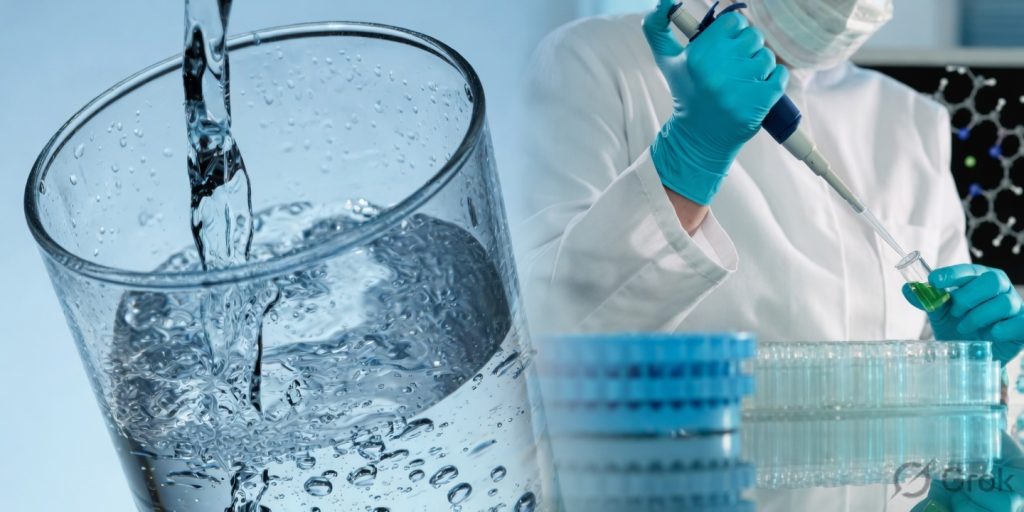
Clean-looking water is not always safe or suitable for use. Water can contain bacteria, dissolved salts, heavy metals, fluoride, nitrates, or other contaminants that cannot be identified simply by looking at it, smelling it, or tasting it.
The quality of water also matters beyond drinking. Industries use water in manufacturing and processing, construction companies use it for concrete-related applications, farmers depend on it for irrigation, and businesses use treated water in boilers, cooling systems, food production, and other operations.
A professional Water Testing Lab helps determine the actual physical, chemical, and microbiological characteristics of a water sample. Laboratory analysis provides measurable results that can be compared with the applicable standard, specification, or intended use.
Stellar Test House provides water testing services for drinking water, groundwater, industrial water, construction water, irrigation water, swimming pools, packaged water, and other application-specific requirements.
What Is Water Testing?
Water testing is the laboratory examination of a water sample to determine its quality and characteristics.
Depending on the source and intended application, a sample may be analysed for physical, chemical, microbiological, or specialized parameters.
Common water quality parameters include:
- pH
- Total Dissolved Solids (TDS)
- Hardness
- Chlorides
- Sulphates
- Fluoride
- Nitrate
- Iron
- Heavy metals
- Residual chlorine
- Total coliform
- E. coli
- Electrical conductivity
- Other application-specific parameters
The testing requirement is not the same for every water sample. Drinking water, groundwater, industrial process water, construction water, and irrigation water may require different parameters and testing criteria.
This is why the first step should be to identify where the water comes from and how it will be used.
Why Is Water Quality Testing Important?
Many water quality problems are not visible. A sample may appear clear while still containing contaminants or having chemical characteristics that make it unsuitable for a particular purpose.
Water quality testing can help identify issues that may otherwise remain unnoticed.
For Drinking Water
Testing can help assess whether water contains microbiological or chemical parameters of concern and whether it meets the applicable drinking water requirements.
For Industrial Applications
Water chemistry can influence scaling, corrosion, fouling, equipment performance, and manufacturing processes.
For Construction
Water used in concrete-related applications needs to meet relevant requirements because unsuitable characteristics may affect durability and reinforcement protection.
For Agriculture
The salinity, sodium level, electrical conductivity, and other characteristics of irrigation water can influence soil and crop management.
For Food Processing
Water may come into direct or indirect contact with food products and processing equipment, making appropriate quality monitoring important.
Laboratory analysis therefore provides useful information for water treatment, quality control, process monitoring, and compliance-related decisions.
Types of Water Testing Services
A reliable testing laboratory can analyse different types of water according to their intended application. The testing scope should be selected based on the source, use, and applicable requirements.
Drinking Water Testing
Drinking water is one of the most important categories of water quality analysis because it is directly associated with human consumption.
Water from municipal supplies, borewells, tankers, overhead tanks, storage systems, and other sources can be tested to assess its quality.
Common parameters may include:
- pH
- TDS
- Total hardness
- Chlorides
- Sulphates
- Fluoride
- Nitrate
- Iron
- Heavy metals
- Residual chlorine
- Total coliform
- E. coli
For drinking water, testing may be carried out with reference to applicable requirements of IS 10500, depending on the required scope.
Testing can be useful for:
- Homes
- Residential societies
- Schools and colleges
- Hospitals
- Hotels
- Restaurants
- Commercial buildings
- Offices
- Manufacturing facilities
Borewell and Groundwater Testing
Borewell water can have different characteristics depending on local geology, groundwater conditions, nearby industrial activity, agricultural practices, and possible sources of contamination.
A borewell sample may be checked for parameters such as:
- TDS
- Hardness
- Fluoride
- Nitrate
- Iron
- Heavy metals
- Chlorides
- Sulphates
- Microbiological parameters
Testing is particularly useful when groundwater is being used for drinking, domestic purposes, irrigation, industrial operations, or construction.
Clear appearance alone does not establish that groundwater is suitable for drinking or any other specific application.
Packaged Drinking Water Testing
Packaged drinking water manufacturers need consistent monitoring of their source water and finished product.
Depending on the applicable requirements, analysis may include:
- Chemical parameters
- Microbiological parameters
- Heavy metals
- Mineral characteristics
- pH
- Taste and odour
- Residual disinfectant
Applicable BIS requirements, including IS 14543 where relevant, should be considered according to the product and regulatory requirements.
Regular testing can help manufacturers monitor consistency, investigate deviations, and maintain their quality control processes.
Natural Mineral Water Testing
Natural mineral water requires assessment of its characteristic mineral composition along with relevant chemical and microbiological parameters.
Testing may include:
- Calcium
- Magnesium
- Sodium
- Potassium
- Heavy metals
- Microbiological parameters
- Other relevant chemical characteristics
Analysis can help monitor source quality and product consistency in accordance with applicable requirements.
Industrial Water Testing
Water plays an important role in manufacturing, utilities, processing, cooling, heating, and other industrial operations.
Changes in water chemistry can contribute to problems such as:
- Scale formation
- Corrosion
- Fouling
- Reduced heat-transfer efficiency
- Equipment maintenance issues
- Process variation
Industrial water testing helps businesses monitor water quality according to the requirements of their particular process.
Industries that may require testing include:
- Manufacturing
- Power generation
- Food processing
- Pharmaceuticals
- Chemicals
- Engineering
- Textile
- Water treatment
- Other process industries
Boiler Water Testing
Boilers require controlled water chemistry for efficient and reliable operation.
Water analysis can help monitor relevant parameters associated with scale, corrosion, dissolved solids, and other conditions that may affect boiler performance.
The exact testing scope depends on the boiler system, water treatment process, and operating requirements.
Cooling Tower Water Testing
Cooling tower systems require water quality monitoring because chemical imbalance and microbiological conditions can contribute to scaling, corrosion, and operational problems.
Regular analysis can help identify changes in water chemistry and support appropriate treatment decisions.
Process Water Testing
Manufacturing processes may require water with specific quality characteristics.
The parameters selected for process water should therefore be based on the production process and the quality specifications applicable to that particular industry.
RO and DM Water Testing
Reverse osmosis and demineralized water systems are commonly used where controlled levels of dissolved impurities are required.
Testing can help monitor the performance of the treatment system and verify the quality of the treated water.
Construction Water Testing
Water is an important component in concrete-related construction activities. Its quality should therefore not be overlooked when evaluating construction materials and processes.
Unsuitable water characteristics may affect concrete durability or reinforcement protection.
Parameters Commonly Considered
Depending on the applicable requirements, construction water may be examined for:
- pH
- Chlorides
- Sulphates
- Organic impurities
- Suspended solids
- Acidity
- Alkalinity
Relevant requirements under IS 456 may be considered for water used in concrete.
Testing water before using a new or alternative source can help construction teams identify potential concerns before they become part of a larger project.
Irrigation Water Testing
Water quality is also important for agriculture. Irrigation water containing excessive salts or an unsuitable sodium balance may affect soil conditions and crop management over time.
Important parameters can include:
- Electrical conductivity
- Salinity
- Sodium absorption ratio
- pH
- Dissolved salts
Irrigation water testing provides information that can help farmers and agricultural professionals evaluate the suitability of a water source for their particular crops and soil conditions.
Swimming Pool Water Testing
Swimming pool water requires regular monitoring to maintain appropriate chemical and microbiological conditions.
Commonly monitored parameters include:
- pH
- Residual chlorine
- Turbidity
- Hardness
- TDS
- Alkalinity
- Microbiological parameters
Swimming pools operated by hotels, clubs, schools, sports facilities, residential societies, and other establishments may require routine monitoring based on their operating and safety requirements.
Water Testing for Food Processing Industries
Water can be used as an ingredient, processing medium, cleaning resource, or utility in food and beverage manufacturing.
Its quality can therefore have an impact on production hygiene and product quality.
Water testing may be relevant for:
- Dairy plants
- Beverage manufacturers
- Bakeries
- Packaged food manufacturers
- Commercial kitchens
- Frozen food facilities
Depending on the application, testing may cover chemical, microbiological, heavy metal, and other relevant parameters.
The testing scope should be selected according to the process, source of water, and applicable food safety or quality requirements.
Battery Water Testing
Some battery manufacturing and industrial applications require water with controlled impurity levels.
Depending on the application, testing may include:
- Conductivity
- pH
- Chlorides
- Sulphates
- Silica
- Iron
- Total dissolved solids
Monitoring water quality can help manufacturers maintain consistency in processes where water purity is important.
High-Purity and Reagent Water Testing
Laboratories, pharmaceutical facilities, research organizations, and precision applications may use distilled, purified, deionized, or demineralized water.
Even small amounts of impurities can affect certain analytical or manufacturing applications.
Depending on the intended use, testing may be performed on:
- Distilled water
- Purified water
- Deionized water
- Demineralized water
- Other high-purity water
The appropriate parameters should always be selected according to the intended application and relevant specification.
Common Water Quality Parameters Explained
Different parameters provide different information about a water sample.
| Parameter | What It Indicates |
|---|---|
| pH | Indicates the acidic or alkaline nature of water |
| TDS | Indicates the concentration of dissolved solids |
| Hardness | Primarily relates to dissolved calcium and magnesium |
| Chlorides | Important for several water quality and corrosion-related assessments |
| Sulphates | Relevant to water quality and certain construction applications |
| Fluoride | An important parameter in drinking water assessment |
| Nitrate | Important chemical parameter, particularly for groundwater and drinking water |
| Heavy Metals | Helps identify potentially harmful metallic contaminants |
| Total Coliform | Indicates possible microbiological contamination |
| E. coli | Indicates possible faecal contamination |
| Electrical Conductivity | Indicates the ability of water to conduct electrical current and is related to dissolved ions |
A water testing report should be interpreted according to the intended use of the water rather than looking at one parameter in isolation.
What Can Affect Water Quality?
Water quality can change for several reasons. Some common factors include:
Source of Water
Municipal supply, groundwater, surface water, tanker water, and treated water can have different characteristics.
Geological Conditions
Groundwater can naturally pick up minerals and dissolved substances from surrounding geological formations.
Industrial Activities
Industrial discharge or nearby activities may influence groundwater or surface water quality if not properly controlled.
Agricultural Runoff
Fertilizers and other agricultural inputs can influence certain water quality parameters.
Storage and Distribution
Even when source water is acceptable, contamination or changes can occur through poorly maintained storage tanks, pipelines, or distribution systems.
Treatment Processes
Water treatment systems such as RO, filtration, softening, and demineralization can change water chemistry. Testing helps monitor whether the treatment process is achieving the required result.
How Is a Water Sample Tested?
A proper testing process begins before the sample reaches the laboratory.
1. Identify the Source
The laboratory needs to know whether the sample is from a borewell, municipal supply, industrial process, construction site, swimming pool, treatment plant, or another source.
2. Define the Intended Use
The purpose of the water determines which parameters are relevant.
3. Select the Test Parameters
The testing scope is selected according to the source, application, standard, specification, or customer requirement.
4. Collect the Sample Properly
Sample collection, container selection, preservation, and transportation can be important for obtaining representative results, particularly for microbiological testing and certain chemical parameters.
5. Laboratory Analysis
The sample is analysed using the applicable testing methods for the selected parameters.
6. Report Generation
The laboratory report presents the test results for the parameters analysed. These results can then be evaluated against the applicable requirements or specification.
How to Choose a Water Testing Lab?
Selecting a laboratory should involve more than comparing prices.
Before sending a sample, consider:
- Whether the laboratory offers the required test parameters
- Whether the relevant tests fall within its applicable accreditation scope
- Testing methods and standards followed
- Technical capabilities
- Sample handling procedures
- Reporting practices
- Turnaround time
- Experience with your type of water
- Ability to support your specific application
If a project requires an accredited test report, it is especially important to check that the specific test and parameter are covered within the laboratory’s applicable scope.
Why Choose Stellar Test House?
Stellar Test House provides water testing services for residential, commercial, industrial, agricultural, construction, and other application-specific requirements.
Our testing capabilities include:
- Physical water analysis
- Chemical analysis
- Microbiological testing
- Heavy metal analysis
- Drinking water testing
- Groundwater testing
- Industrial water testing
- Construction water testing
- Application-specific water analysis
- Testing with reference to applicable BIS requirements
Our technical team and laboratory facilities support clients who need analytical information for quality control, process monitoring, project requirements, and water management decisions.
The appropriate testing package can be determined according to the source of water, intended application, required parameters, and applicable standards.
Conclusion
Water quality cannot be reliably determined from appearance, taste, or smell alone. Different water sources can contain physical, chemical, or microbiological characteristics that matter for drinking, industrial operations, construction, agriculture, food processing, and other applications.
A professional Water Testing Lab provides objective laboratory data that can help users understand the quality of their water and make informed decisions about treatment, process control, safety, and applicable requirements.
Whether you require drinking water testing, borewell water testing, industrial water testing, construction water testing, irrigation water testing, swimming pool testing, or application-specific analysis, the testing parameters should be selected according to the source and intended use.
Stellar Test House provides water testing services for a wide range of applications with laboratory capabilities covering physical, chemical, microbiological, and specialized analysis.
For your testing requirement, contact Stellar Test House and discuss the water source, intended application, and parameters you need to evaluate.
Frequently Asked Questions About Water Testing
What does a Water Testing Lab do?
A Water Testing Lab analyses water samples for selected physical, chemical, microbiological, and specialized parameters. The results help determine the characteristics and suitability of water for its intended application.
Which parameters are commonly tested in water?
Common parameters include pH, TDS, hardness, chlorides, sulphates, fluoride, nitrate, iron, heavy metals, residual chlorine, total coliform, E. coli, and other application-specific parameters.
Is borewell water safe for drinking?
Borewell water should not be considered safe for drinking simply because it looks clean. Groundwater can contain chemical or microbiological contaminants that cannot be identified through appearance alone. Laboratory testing is recommended to assess its quality.
Which standard is used for drinking water?
Drinking water quality may be assessed with reference to applicable requirements of IS 10500, depending on the required testing scope and purpose.
Why is construction water tested?
Water used in concrete-related applications can influence concrete durability and reinforcement protection. Testing helps identify potentially unsuitable characteristics before the water is used.
What is industrial water testing?
Industrial water testing involves analysing water used in manufacturing processes and utility systems such as boilers, cooling towers, RO systems, DM plants, and process operations.
How much does water testing cost?
The cost depends on the source of the sample, number of parameters, testing methods, and required scope. A basic analysis and a comprehensive industrial testing requirement will generally have different costs.
How long does a water test take?
Turnaround time depends on the parameters and testing methods required. Routine analysis may take a few working days, while specialized tests can require additional time.
Why use an accredited testing laboratory?
An accredited laboratory operates under a recognized quality framework for the tests covered by its accreditation. When accreditation is required, it is important to verify that the specific test parameters are included in the laboratory’s applicable scope.