
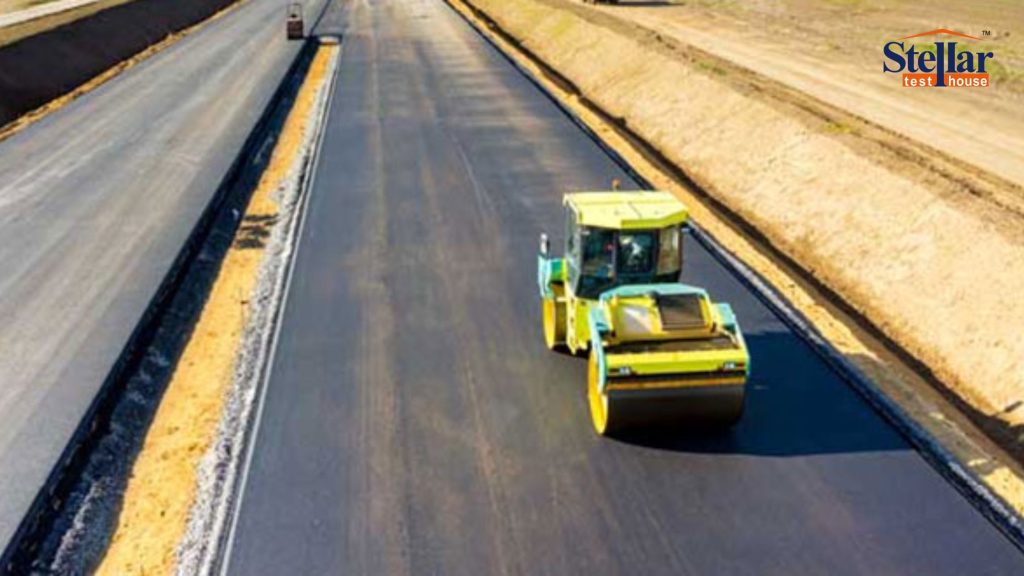
Roads are the backbone of any nation’s infrastructure, connecting cities, supporting trade, and driving economic growth. The quality, strength, and durability of any road depend heavily on the materials used in its construction. With rapid technological advancements, modern road construction now involves sophisticated materials that offer better performance, longevity, and cost efficiency.
At Stellar Test House, a leading Road Material Testing Lab, we understand that every road material must meet strict quality standards to ensure safety and long-term performance. Below, we explore the top 10 types of road construction materials that are widely used in modern infrastructure projects.
1. Soil
Soil is the foundation of any road structure. It provides the subgrade upon which all other layers are placed. The strength and stability of the road depend on the type of soil used. Before construction begins, soil undergoes rigorous testing in a Road Material Testing Lab to determine its bearing capacity, moisture content, and compaction characteristics.
A well-compacted soil base ensures that the road can withstand heavy traffic loads without excessive settlement.
2. Aggregates
Aggregates form the skeleton of road construction. They provide strength, stability, and drainage. Depending on the layer (base, sub-base, or surface), different sizes and types of aggregates are used.
In a Road Material Testing Lab, aggregate testing includes impact value, crushing value, and abrasion resistance to confirm their suitability for road use. High-quality aggregates ensure a solid and durable pavement structure
3. Bitumen
Bitumen is one of the most essential materials in flexible pavement construction. It acts as a binding agent that holds the aggregates together. Bitumen provides flexibility and waterproofing, which helps the road withstand temperature variations and traffic stresses.
At a Bitumen & Bituminous Material Testing Lab, properties like penetration, ductility, viscosity, and softening point are analyzed to ensure the right grade and quality for construction.
4. Bituminous Mix (Job Mix Formula)
A Job Mix of Bituminous Material is a precise combination of aggregates, filler, and bitumen. This mix determines the road’s performance characteristics such as durability, skid resistance, and load-bearing capacity.
Every Job Mix of Bituminous Material Testing Lab evaluates the proportion of each component to achieve maximum stability and minimum voids. Properly designed bituminous mixes enhance pavement life and reduce maintenance costs.
5. Bitumen Emulsion
Bitumen emulsion is a modern alternative to traditional bitumen, especially for cold weather or low-energy applications. It is a mixture of bitumen, water, and an emulsifying agent. Bitumen emulsions are widely used in surface dressing, tack coats, and slurry sealing.
At a Bitumen Emulsion Testing Lab, key properties like residue, viscosity, and breaking behavior are tested to ensure performance and consistency.
6. Cement Concrete
For rigid pavements, cement concrete plays a crucial role. Concrete roads offer excellent durability and require minimal maintenance compared to bituminous roads. The concrete mix’s quality, water-cement ratio, and curing process directly impact road performance.
Testing in a Road Material Testing Lab ensures that concrete achieves the desired compressive strength, workability, and durability.
7. Fly Ash
Fly ash, a by-product of coal combustion, is now commonly used as a supplementary material in road construction. It improves soil strength, reduces permeability, and enhances the workability of concrete.
By incorporating fly ash, engineers reduce construction costs and promote sustainability — a key factor in modern infrastructure development.
8. Geosynthetics
Geosynthetics such as geotextiles, geomembranes, and geogrids are used to reinforce soil and control erosion. These synthetic materials improve the load-bearing capacity of subgrades and prevent deformation.
In advanced road projects, geosynthetics help extend road life while reducing maintenance requirements, making them an eco-friendly and cost-effective solution.
9. Steel and Reinforcement Materials
Steel is essential for reinforced concrete roads and bridges. It provides tensile strength and structural stability. Reinforcement materials ensure the pavement can withstand heavy traffic loads, temperature fluctuations, and ground movements.
Quality testing of steel in a Road Material Testing Lab confirms its tensile strength, ductility, and resistance to corrosion before use in construction.
10. Recycled Materials
Sustainability is a major focus in modern road construction. Recycled materials such as reclaimed asphalt pavement (RAP), crushed concrete, and plastic waste are now being reused effectively.
By incorporating recycled materials, road engineers not only reduce waste but also minimize the carbon footprint associated with traditional construction materials.
Importance of Material Testing in Road Construction
Every material used in road construction must undergo rigorous testing to ensure safety and performance. A Road Material Testing Lab plays a vital role in verifying material quality at every stage — from raw materials to final pavement layers.
At Stellar Test House, we specialize in:
- Bitumen & Bituminous Material Testing Lab Services
- Bitumen Emulsion Testing Lab Services
- Job Mix of Bituminous Material Testing Lab Services
Our experts use advanced instruments and international testing standards to deliver reliable results, helping contractors and engineers build roads that last longer and perform better.
Conclusion
Modern infrastructure demands high-quality, durable, and sustainable road materials. From soil and aggregates to advanced bituminous mixtures and recycled components, each material has a unique role in road construction.
With the right testing and quality control at a certified Road Material Testing Lab, engineers can ensure that every road built today will stand strong for decades to come.
At Stellar Test House, we’re committed to providing precise and dependable testing services to support India’s growing infrastructure. Because when it comes to building better roads — quality always comes first.

25phwin https://www.25phwing.com