Non Destructive Testing (NDT) Lab in India | NABL Accredited NDT Testing Services
Professional Non Destructive Testing (NDT) Services for Concrete, Steel, Bridges & Industrial Structures

Stellar Test House (STH) is a leading Non Destructive Testing Lab offering comprehensive NDT Testing services for concrete structures, welded joints, fabricated components, steel structures, bridges, industrial plants, and infrastructure projects. Our experienced engineers use advanced testing equipment and internationally accepted testing procedures to evaluate structural health without causing any damage to the test specimen.
As a trusted Non Destructive Testing Lab India, we provide both laboratory and onsite inspection services across multiple industries. Whether you require routine quality assessment, structural investigation, condition assessment, bridge inspection, or failure analysis, our NDT experts deliver accurate, reliable, and technically sound test reports.
If you are searching for the Best NDT Testing Lab in Delhi/NCR, STH provides professional inspection services with fast reporting, experienced engineers, and compliance with Indian Standards (IS), ASTM Standards, and other applicable specifications.
What is Non-Destructive Testing (NDT)?
Non Destructive Testing (NDT) is a scientific method used to evaluate the condition, quality, strength, and integrity of a material, component, or structure without damaging it. Unlike destructive testing, the specimen remains fully usable after inspection.
NDT techniques help engineers identify internal defects, surface cracks, voids, corrosion, thickness variations, weld discontinuities, reinforcement details, and structural weaknesses before they become critical failures.
Modern industries rely on Non Destructive Testing NDT to improve safety, reduce maintenance costs, extend service life, and ensure compliance with engineering standards
Why Choose Non Destructive Testing?
Non Destructive Testing offers several advantages over conventional destructive testing methods.
- No damage to the structure or component
- Cost-effective inspection of existing structures
- Fast and accurate onsite testing
- Early detection of cracks and hidden defects
- Improved structural safety and reliability
- Reduced downtime during inspection
- Suitable for old and newly constructed structures
- Compliance with IS and ASTM standards
- Supports preventive maintenance programs
- Extends the life of structures and equipment
Our Non Destructive Testing Services
Concrete NDT Testing
Concrete structures gradually deteriorate due to environmental exposure, overloading, poor construction practices, corrosion of reinforcement, and aging. Our Concrete NDT services help determine the in-situ condition of concrete without causing unnecessary damage.
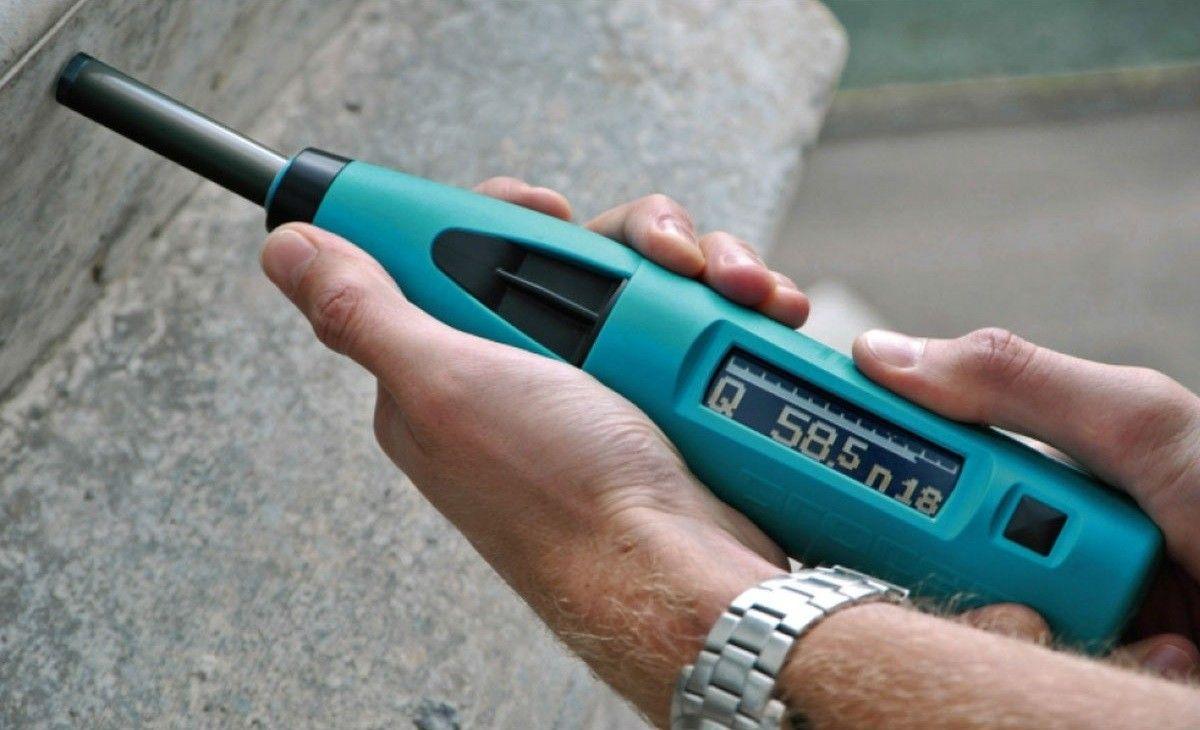
Rebound Hammer Test
The Rebound Hammer Test is one of the most widely used methods for estimating the surface hardness and probable compressive strength of hardened concrete. The rebound value obtained from the hammer provides an indication of concrete quality and uniformity.
This test is commonly used during quality assessment of buildings, bridges, industrial structures, commercial complexes, and residential projects.
Standard: IS 13311 (Part 2)
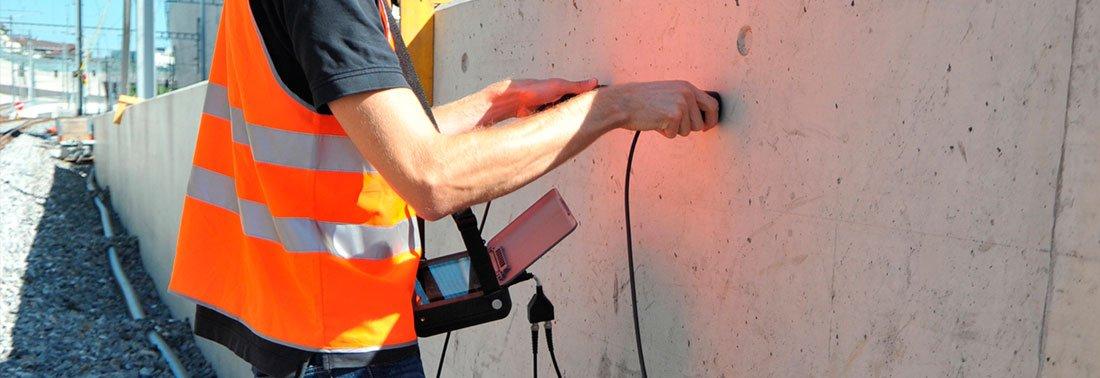
Ultrasonic Pulse Velocity (UPV) Test
The Ultrasonic Pulse Velocity Test evaluates the quality of concrete by transmitting high-frequency ultrasonic waves through the structure. The travel time of the pulse helps determine the presence of cracks, voids, honeycombing, segregation, and other internal defects.
UPV testing is highly effective for assessing concrete uniformity and detecting hidden deterioration that cannot be identified through visual inspection.
Standard: IS 516 Part 5 Section 2
Concrete Core Testing
Concrete core testing involves extracting cylindrical core samples from hardened concrete for laboratory evaluation. The cores are tested to determine the actual compressive strength and verify structural performance.
This method is generally adopted when confirmation of concrete strength is required after NDT evaluation.
Standard: IS 516
Core Cutting Test
Core cutting helps obtain representative concrete samples for laboratory examination. It is commonly performed for quality verification of slabs, beams, columns, pavements, and structural members.
Standard: IS 516
Crack Depth Measurement
Cracks may indicate structural distress or durability issues. Crack Depth Measurement helps determine the depth of visible cracks using ultrasonic techniques, enabling engineers to decide appropriate repair methods.
Standard: IS 516 Part 5 Section 2
Pull Out (CAPO) Test
The Pull Out Test estimates the in-place compressive strength of concrete by measuring the force required to pull an embedded insert from the concrete.
This method provides reliable information about the structural performance of existing concrete.
Standard: IS 2770 (Part 1)
Pile Integrity Test (PIT)
Pile Integrity Testing evaluates the structural condition of foundation piles without excavation. It detects defects such as necking, cracks, voids, and changes in pile cross-section.
This test is widely used for residential buildings, commercial complexes, bridges, flyovers, industrial projects, and infrastructure developments.
Standard: IS 14893
Ferro Scanning / Cover Meter Test
Ferro Scanning determines the location, spacing, diameter, and concrete cover of reinforcing steel bars without damaging the concrete.
The test is extremely useful before drilling, retrofitting, structural strengthening, and renovation projects.
Metal NDT Testing
Metal components and welded structures require periodic inspection to ensure safety and reliability. Our Metal NDT Testing services help identify manufacturing defects, welding discontinuities, fatigue cracks, corrosion, and internal flaws before they lead to failure.
Dye Penetrant Testing (DPT)
Dye Penetrant Testing is used to detect surface-breaking defects in non-porous metallic materials. The test identifies cracks, pinholes, seams, laps, and other discontinuities that may not be visible to the naked eye.
Standard: ASTM E165
Magnetic Particle Inspection (MPI)
Magnetic Particle Inspection detects surface and near-surface defects in ferromagnetic materials. The technique is highly effective for weld inspection, castings, forgings, shafts, pressure vessels, and fabricated components.
Standard: ASTM E709
Ultrasonic Flaw Detection (UT)
Ultrasonic Flaw Detection uses high-frequency sound waves to locate internal discontinuities in metal components and welded joints.
This method is widely used for quality inspection of pressure vessels, pipelines, structural steel, heavy fabrication, and engineering components.
Standard: IS 13311 (Part 1)
Ultrasonic Thickness Measurement
Ultrasonic Thickness Testing measures the thickness of metallic components without cutting or dismantling them.
The technique is commonly used to monitor corrosion, erosion, wear, and remaining wall thickness in tanks, pipelines, pressure vessels, and industrial equipment.
Standard: ASTM A338
Radiography Testing (RT)
Radiographic Testing is one of the most reliable methods for detecting internal defects in welds, castings, and fabricated components. X-rays or Gamma rays are passed through the material, producing an image that reveals internal discontinuities such as porosity, slag inclusion, lack of fusion, and cracks.
Although comparatively expensive, Radiography provides highly accurate internal inspection and is extensively used in critical industrial applications.
Standard: ASTM 1032-12
Bridge Load Testing & Structural Stability Assessment
In addition to laboratory testing, STH also offers Bridge Load Testing, Structural Stability Test, and complete Structural Testing Lab services for existing and newly constructed structures.
Our structural evaluation services include:
- Bridge Load Testing
- Structural Stability Test
- Building Health Assessment
- Reinforced Concrete Investigation
- Steel Structure Inspection
- Foundation Evaluation
- Industrial Structure Inspection
- Infrastructure Condition Assessment
- Rehabilitation Investigation
- Safety Evaluation for Existing Structures
These services help engineers make informed decisions regarding repair, strengthening, rehabilitation, or continued serviceability of structures.
Why Choose Stellar Test House?
At Stellar Test House, we combine experienced engineers, advanced testing equipment, and standardized testing procedures to deliver reliable and accurate NDT solutions.
Our key strengths include:
- NABL Accredited Testing Laboratory
- Experienced NDT Engineers
- Advanced Testing Equipment
- Onsite Testing Across India
- Compliance with IS & ASTM Standards
- Accurate and Timely Test Reports
- Competitive Pricing
- Technical Support for Consultants, Contractors & Industries
- Comprehensive Concrete and Metal NDT Services
Whether you need Metal NDT Testing, Concrete NDT, Bridge Load Testing, or a complete Structural Stability Test, our experts ensure dependable inspection services with technically validated reports.
Concrete NDT Testing Services
| S. No. | Test Name | Standard |
|---|---|---|
| 1 | Rebound Hammer Test | IS 13311 (Part II) |
| 2 | Core Cutting + Compressive Strength (Up to 100 mm Dia) | IS 516 |
| 3 | Concrete Core Testing (Compressive Strength) | IS 516 |
| 4 | Bitumen Core Cutting + Density & Binder Testing | ASTM D2172 |
| 5 | Ultrasonic Pulse Velocity (UPV) Test | IS 516 Part 5 Section 2 |
| 6 | Crack Depth Measurement | IS 516 Part 5 Section 2 |
| 7 | Pull Out (CAPO) Test | IS 2770 (Part 1) |
| 8 | Pile Integrity Test | IS 14893 |
| 9 | Ferro Scanning / Cover Meter Test | As Applicable |
Metal NDT Testing Services
| S. No. | Test Name | Standard |
| 1 | Dye Penetration Test (DPT) | ASTM E165 |
| 2 | Magnetic Particle Inspection (MPI) | ASTM E709 |
| 3 | Ultrasonic Flaw Detection Test (UT) | IS 13311 (Part I) |
| 4 | Ultrasonic Thickness Measurement | ASTM A338 |
| 5 | Radiography Test (RT) | ASTM 1032-12 |
Contact Our NDT Experts
If you are looking for a reliable Non Destructive Testing Lab, Non Destructive Testing Lab India, NDT Testing, Metal NDT Testing, Structural Testing Lab, Bridge Load Testing, or Structural Stability Test, Stellar Test House offers complete inspection and testing solutions for construction, infrastructure, industrial, and engineering projects.
Contact our technical team today to schedule laboratory or onsite Non Destructive Testing services with accurate reports, experienced engineers, and industry-standard testing procedures.