
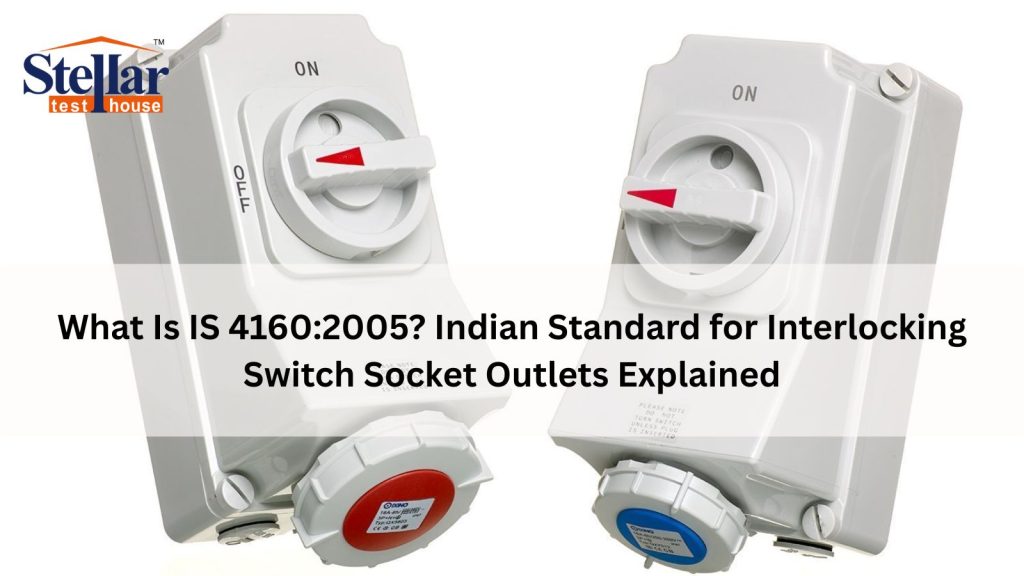
Electrical safety in industrial environments is not just about good design—it depends heavily on compliance with well-defined standards. One such important Indian Standard is IS 4160:2005, which governs the safety, construction, and performance of interlocking switch socket outlets. This standard plays a vital role in reducing electrical hazards, especially in high-load and industrial applications.
In this article, we will clearly explain what Interlocking Switch Socket Outlets IS 4160:2005 means, why it matters, and how proper testing ensures compliance and safety.
Understanding Interlocking Switch Socket Outlets
Interlocking switch socket outlets are specially designed electrical devices where the plug and socket are mechanically linked with a switch. This interlocking mechanism ensures that:
- The plug cannot be inserted or withdrawn while the switch is ON
- Power flows only after the plug is fully engaged
- Accidental arcing and electric shock risks are minimized
These features make interlocking socket outlets essential for industrial machinery, construction sites, manufacturing plants, and heavy electrical installations.
What Is IS 4160:2005?
IS 4160:2005 is the Indian Standard issued by the Bureau of Indian Standards (BIS) that specifies requirements for interlocking switch socket outlets. The standard focuses on safety, durability, mechanical strength, and electrical performance under normal and abnormal operating conditions.
The objective of IS 4160:2005 is simple but critical:
to ensure safe operation of electrical equipment by preventing live plug insertion or removal.
Scope of Interlocking Switch Socket Outlets IS 4160:2005
The standard applies to interlocking socket outlets used in:
- Industrial and commercial installations
- Power distribution systems
- Electrical equipment operating at specified voltage and current ratings
IS 4160:2005 covers aspects such as:
- Construction requirements
- Degree of protection against electric shock
- Mechanical endurance
- Temperature rise limits
- Insulation and dielectric properties
Every compliant product must meet these requirements before it can be supplied or installed.
Why IS 4160:2005 Is Important for Electrical Safety
Electrical accidents often occur due to improper handling of live connections. IS 4160:2005 addresses this risk by enforcing interlocking mechanisms that control current flow.
Some key safety benefits include:
- Reduced risk of electrical arcing
- Protection against accidental contact with live parts
- Improved operator safety during connection and disconnection
- Enhanced reliability in harsh industrial environments
In many industrial projects, compliance with IS 4160 is not optional—it is expected by consultants, auditors, and safety authorities.
Key Requirements Covered Under IS 4160:2005
The standard lays down strict technical and safety requirements, including:
1. Mechanical Interlocking
The switch must operate in coordination with the plug and socket arrangement. Power should only be available when proper engagement is achieved.
2. Electrical Performance
Current-carrying parts must handle rated loads without excessive heating or performance degradation.
3. Insulation & Dielectric Strength
Insulation resistance and dielectric tests confirm protection against leakage current and breakdown.
4. Mechanical Strength & Endurance
Socket outlets must withstand repeated operations and mechanical stress during normal use.
5. Environmental Protection
Ingress protection requirements ensure safe performance in dusty or humid industrial conditions.
Interlocking Socket Outlet Testing as per IS 4160
To confirm compliance, products must undergo interlocking socket outlet testing as per IS 4160 in a recognized laboratory. Testing validates whether the product meets all safety and performance criteria defined in the standard.
Typical tests include:
- Visual and dimensional inspection
- Mechanical operation and endurance tests
- Temperature rise test
- Insulation resistance and high-voltage test
- Functional interlocking verification
Each test is conducted under controlled conditions to simulate real-world usage.
Importance of Choosing the Right IS 4160 Testing Lab
Accurate testing requires technical expertise, calibrated equipment, and in-depth knowledge of Indian Standards. Selecting the right IS 4160 Testing Lab ensures reliable results and smoother certification processes.
Manufacturers and suppliers often prefer certified facilities that provide:
- Detailed test reports
- Compliance guidance
- Faster turnaround time
- Support during audits and approvals
IS 4160:2005 Testing Laboratory India – Growing Industry Need
With the expansion of industrial infrastructure, the demand for IS 4160:2005 testing laboratory India has increased significantly. Regulatory bodies and project consultants now insist on third-party test reports before approving electrical installations.
Testing laboratories play a key role by:
- Helping manufacturers meet compliance requirements
- Reducing field failures and safety incidents
- Supporting quality assurance systems
IS 4160 Testing Lab in Noida – A Strategic Advantage
Noida has emerged as an industrial and manufacturing hub, making access to an IS 4160 Testing Lab in Noida highly valuable. Proximity to testing facilities reduces logistics delays and accelerates product approval timelines.
Local testing support also allows:
- Better coordination during sample submission
- Faster resolution of non-compliance issues
- Direct technical interaction with experts
Role of an Interlocking Switch Socket Outlet Testing Lab
An experienced Interlocking switch socket outlet Testing Lab does more than just testing. It supports manufacturers throughout the compliance journey by identifying gaps early and recommending corrective actions.
Reliable testing helps ensure that products entering the market are safe, durable, and compliant with IS 4160:2005 requirements.
Final Thoughts
Interlocking Switch Socket Outlets IS 4160:2005 is a crucial standard that directly impacts electrical safety in industrial environments. Understanding its requirements and ensuring proper testing is essential for manufacturers, suppliers, and project owners alike.
By choosing a competent IS 4160 Testing Lab, businesses not only meet regulatory expectations but also build trust, improve product quality, and reduce long-term risk.