
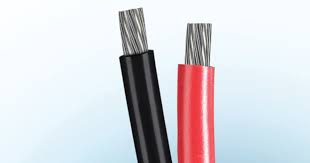
In the last decade, India has witnessed an unprecedented growth in solar power generation. With the government’s focus on renewable energy and ambitious targets for solar installations, the demand for reliable and safe photovoltaic (PV) components has risen sharply. Among these, cabling systems play a critical role, ensuring the smooth and efficient transfer of power from solar modules to inverters and further into the grid. Recognizing this, the Bureau of Indian Standards (BIS) introduced IS: 17293:2020, a comprehensive standard for electric cables used in photovoltaic systems for rated voltage up to 1500 V d.c.
This standard has become a cornerstone for the solar industry, ensuring safety, reliability, and long-term performance of solar power plants across the country.
Why Standards Matter in Photovoltaic Systems
Solar PV systems operate in harsh and demanding environments. Cables are often exposed to extreme temperatures, UV radiation, moisture, mechanical stress, and fluctuating electrical loads. A minor compromise in cable quality can lead to:
- Power losses and reduced efficiency
- Safety hazards like short circuits, fire risks, and electrocution\
- Higher maintenance costs and premature system failure
By introducing IS: 17293:2020 Electric Cables for Photovoltaic BIS aligned Indian practices with international benchmarks such as IEC 62930 and EN 50618, ensuring that cables installed in Indian solar projects meet global performance and safety standards.
Overview of IS: 17293:2020
The standard IS: 17293:2020 specifically covers single-core flexible cables intended for use in PV systems, with a rated d.c. voltage of up to 1500 V. This high voltage rating is especially relevant today, as solar developers are increasingly adopting 1500 V d.c. systems over the older 1000 V d.c. systems to reduce balance-of-system (BOS) costs and improve efficiency.
Some of the key aspects of the standard include:
- Cable Construction
- Conductor: Class 5 flexible tinned or bare copper conductors. Tinned conductors help in resisting corrosion and extending life.
- Insulation & Sheath: Cross-linked polyethylene (XLPE) or other cross-linked elastomeric materials are used for insulation and sheathing to withstand thermal, mechanical, and environmental stresses.
- Core Identification: Generally black insulation, with optional marking for easier identification.
- Electrical Characteristics
- Rated voltage: 1.5 kV d.c.
- Test voltages: Higher test voltages to ensure insulation integrity.
- Current carrying capacity: Defined under standard installation conditions.
- Mechanical Properties
- Flexibility to allow ease of installation, even in complex layouts.
- Resistance to abrasion and mechanical impact.
- Minimum bending radius requirements for safe installation.
- Thermal Properties
- Operating temperature range: Typically from -40°C to +90°C (with conductor temperatures up to +120°C in some cases).
- Enhanced resistance to thermal aging.
- Environmental Properties
- UV resistance for prolonged outdoor use.
- Ozone resistance to withstand open-air exposure.
- Water and moisture resistance ensuring safe operation in humid or wet conditions.
- Halogen-free and low smoke emission in case of fire, reducing risk to human life and equipment.
Importance of 1500 V d.c. Rating
Traditionally, PV systems were designed with a 1000 V d.c. rating, but the industry has shifted towards 1500 V systems due to multiple advantages:
- Higher efficiency: Fewer system losses and lower line current for the same power output.
- Reduced cabling cost: Longer string lengths reduce the number of cables and connections needed.
- Lower installation cost: Fewer combiner boxes and accessories required.
- Improved return on investment: Overall reduction in BOS cost and improved project economics.
IS: 17293:2020 ensures that cables can safely operate in these higher-voltage systems without compromising on safety or performance.
Testing and Compliance
For a cable manufacturer to claim compliance with IS: 17293:2020, the cables must undergo stringent testing, such as:
- Electrical Tests: Voltage withstand, insulation resistance, and partial discharge.
- Thermal Tests: Heat aging, cold bend, and temperature cycling.
- Mechanical Tests: Tensile strength, elongation, abrasion resistance, and impact tests.
- Environmental Tests: UV resistance, water absorption, and ozone resistance.
- Fire Performance: Flame retardance, halogen emission, and smoke density tests.
These rigorous tests provide assurance to EPC contractors, developers, and end-users that the cables will perform reliably over the plant’s lifetime, typically 25 years or more.
Benefits to the Solar Industry
The adoption of IS: 17293:2020 has multiple benefits for stakeholders:
- For Manufacturers: Provides a clear benchmark for design and testing, enabling them to produce globally competitive products.
- For EPC Contractors: Reduces risk of failures and downtime, while simplifying procurement.
- For Developers and Investors: Enhances plant reliability and ensures long-term returns on investment.
- For Regulators and Policy Makers: Establishes a uniform quality framework that supports India’s renewable energy targets.
The Real Impact
Beyond the technical details, it’s important to understand the human impact of this standard. Solar power is not just about generating electricity—it’s about creating a cleaner, safer, and more sustainable future. Reliable cables, manufactured as per IS: 17293:2020, play an unseen yet vital role in this journey.
Imagine a large-scale solar farm in Rajasthan, where thousands of modules are exposed to scorching heat and dust storms. Or a rooftop solar installation in Kerala, enduring heavy monsoon rains. In both cases, the cables silently carry power, day after day, ensuring lights stay on, industries run, and homes are powered—without failures, without fire hazards, without risk to people.
By setting stringent requirements, IS: 17293:2020 protects not only investments but also human lives and the environment. It reduces the risk of electrical accidents, minimizes downtime, and ensures that solar truly remains the clean, green promise it is meant to be.
Conclusion
As India moves towards its ambitious renewable energy goals, standards like IS: 17293:2020 are crucial in building a robust solar ecosystem. These cables may not be the most visible part of a solar project, but they are among the most critical. By ensuring safety, durability, and efficiency, they empower solar plants to deliver reliable power for decades.
For project developers, EPC contractors, and policymakers, adopting and enforcing this standard is not just a technical requirement—it’s a commitment to quality, safety, and sustainability. In the grand scheme of India’s clean energy future, IS: 17293:2020 is more than just a standard; it’s a backbone that keeps the solar revolution moving forward.