
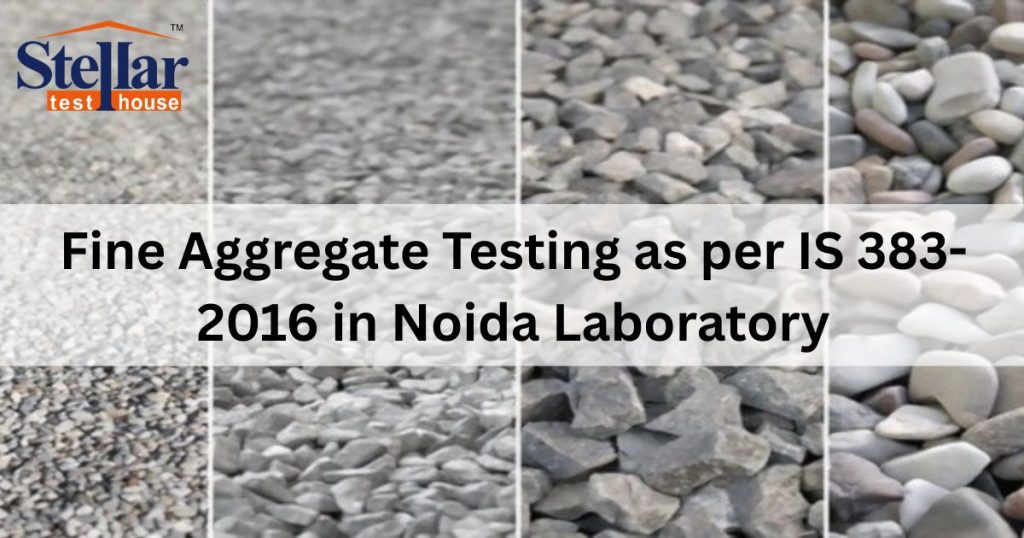
In the construction industry, the quality of materials directly affects the strength and durability of any structure. Among these materials, fine aggregate (commonly known as sand) plays a crucial role. To ensure consistent quality, Fine Aggregate IS:383-2016 standards are followed across India. If you are working on a project in NCR, choosing a reliable Testing Laboratory Noida becomes essential for accurate results and compliance.
What is Fine Aggregate as per IS 383?
Fine aggregate refers to natural sand or crushed stone particles that pass through a 4.75 mm sieve. According to IS 383, fine aggregates must meet specific grading, cleanliness, and strength requirements. These standards ensure that the material performs well in concrete and mortar applications.
The guidelines provided in Fine Aggregate IS:383-2016 help engineers and builders maintain uniform quality across construction projects.
Importance of Fine Aggregate Testing
Quality testing is not just a formality—it ensures safety and long-term performance. Fine Aggregate Testing helps identify impurities, particle size distribution, and other critical parameters.
In many cases, construction failures have been linked to poor-quality sand. That’s why samples are tested in a certified Aggregate Testing Lab before use. Proper testing reduces risks, improves bonding in concrete, and enhances structural stability.
Key Tests Conducted in IS 383 Testing Lab
A professional IS 383 testing Lab performs several tests to verify the quality of fine aggregates:
- Sieve Analysis (Grading Test)
This test determines the particle size distribution. It ensures the sand meets IS 383 grading zones. - Silt Content Test
Excess silt weakens concrete. The acceptable limit is defined under IS 383 standards. - Specific Gravity and Water Absorption
These values affect mix design and concrete strength. - Bulking of Sand Test
Moisture content causes volume changes in sand, which must be measured.
Some test results are carefully recorded and analyzed before approval is given for construction use.
Why Choose an IS 383 Lab in Noida?
Noida has become a major hub for infrastructure and real estate development. With rapid growth, the demand for reliable IS 383 Lab Noida services has increased significantly.
A certified Testing Laboratory Noida offers:
- Accurate and fast test results
- Compliance with Indian Standards
- Experienced technical staff
- Advanced testing equipment
Choosing a local Sand Testing Lab in Noida ensures quicker turnaround time and better coordination for your project.
Role of Aggregate Testing Lab in Construction
An Aggregate Testing Lab ensures that all materials used meet regulatory standards. The lab plays a key role in:
- Quality control of raw materials
- Ensuring compliance with IS 383
- Supporting safe construction practices
- Reducing project risks
In some projects, multiple samples are tested regularly to maintain consistent quality throughout the construction phase.
How to Select the Right Testing Laboratory in Noida
Selecting the right Testing Laboratory Noida can make a big difference. Here are a few tips:
- Check for certifications and approvals
- Ensure the lab follows Fine Aggregate IS:383-2016 guidelines
- Look for modern equipment and experienced staff
- Verify turnaround time and reporting accuracy
A trusted IS 383 testing Lab will always provide transparent and reliable results.
Conclusion
Fine aggregate quality cannot be compromised in any construction project. Following Fine Aggregate IS:383-2016 standards ensures durability, strength, and safety. With the availability of advanced IS 383 Lab Noida services, builders and contractors can easily maintain high-quality standards.
If you are planning a project, always rely on a certified Sand Testing Lab in Noida or Aggregate Testing Lab to get your materials tested. Accurate testing today prevents costly repairs tomorrow.