
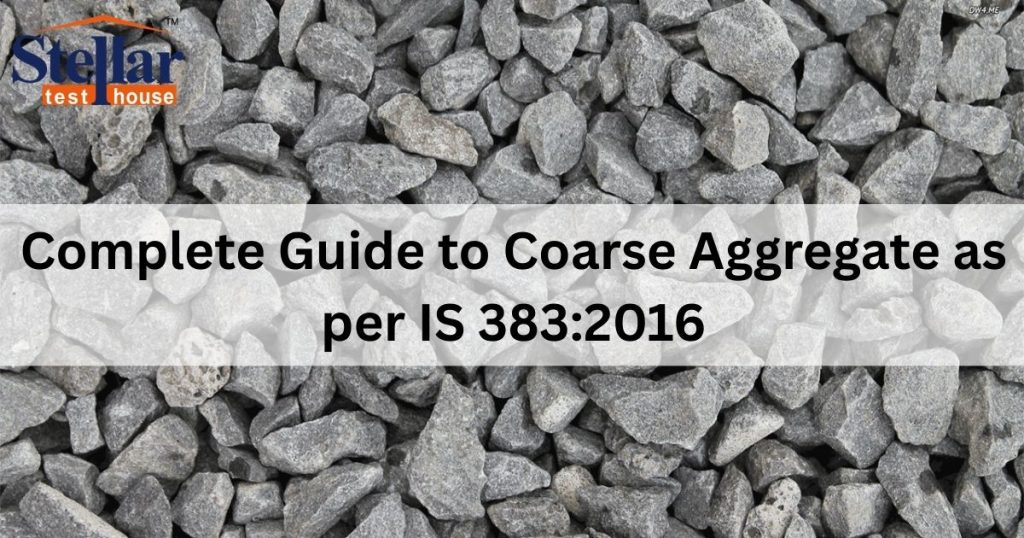
When it comes to building strong and durable structures, the quality of materials plays a decisive role. Among these materials, coarse aggregates form the backbone of concrete. Understanding the specifications defined under IS 383:2016 is essential for engineers, contractors, and builders who want consistent performance and safety in construction.
This guide breaks down everything you need to know about Coarse Aggregate IS 383, including standards, testing methods, and practical insights—written in a clear, human-friendly way.
What is Coarse Aggregate?
Coarse aggregate refers to particles that are larger than 4.75 mm and are commonly derived from crushed stone, gravel, or natural rock. These aggregates provide strength, stability, and volume to concrete.
In simple terms, if cement is the glue and sand fills the gaps, coarse aggregate acts as the structural skeleton.
Overview of IS 383:2016
IS 383:2016 is the Indian Standard that specifies the requirements for aggregates used in concrete. It covers both fine and coarse aggregates and ensures that materials meet quality benchmarks for safe construction.
The updated version introduced improvements in classification, grading, and quality control, making it more aligned with modern construction practices.
When professionals refer to Coarse Aggregate IS:383-2016, they are talking about aggregates that meet these strict guidelines.
Key Requirements of Coarse Aggregate as per IS 383
To comply with Coarse Aggregate Standards, the material must meet several important criteria:
1. Grading Requirements
Aggregates must fall within specific size ranges to ensure proper workability and strength.
- Common sizes: 10 mm, 20 mm, 40 mm
- Proper grading helps reduce voids and improves bonding
2. Shape and Texture
- Angular aggregates are preferred for better interlocking
- Flaky and elongated particles should be limited
3. Strength and Durability
Aggregates should resist crushing and impact. Weak aggregates can compromise the entire structure.
4. Water Absorption
Lower water absorption indicates better quality and durability.
5. Cleanliness
Aggregates must be free from dust, clay, organic matter, and harmful substances.
Importance of Coarse Aggregate Testing
No matter how good the source looks, testing is essential before using aggregates in construction. Reliable Coarse Aggregate Testing ensures that materials meet IS standards and perform as expected.
Most tests are carried out in a certified IS 383 Aggregate Lab to maintain accuracy and compliance.
Common Tests Include:
1. Sieve Analysis
Determines particle size distribution and grading.
2. Aggregate Crushing Value Test
Measures resistance to crushing under load.
3. Aggregate Impact Value Test
Evaluates toughness and resistance to sudden impact.
4. Water Absorption Test
Checks porosity and durability.
5. Flakiness and Elongation Index
Assesses particle shape.
These tests are often performed in a professional IS 383 Testing Lab to ensure reliable results.
Why IS 383 Compliance Matters
Using aggregates that follow IS 383 is not just about compliance—it directly affects the safety and longevity of structures.
Here’s why it matters:
- Improves concrete strength
- Reduces risk of structural failure
- Enhances durability in harsh conditions
- Ensures consistency in construction quality
In many projects, certified test reports are required before approval is granted.
Choosing the Right Aggregate Testing Lab
If you are working on a project in Uttar Pradesh, selecting a reliable Aggregate Testing Lab in Noida can make a significant difference.
What to Look For:
- NABL accreditation or equivalent certification
- Experienced technicians
- Modern testing equipment
- Quick and accurate reporting
A professional lab ensures that all tests are conducted as per IS 383, giving you confidence in your materials.
Common Mistakes to Avoid
Even experienced professionals sometimes overlook basic issues. Here are a few common mistakes:
- Using untested aggregates
- Ignoring grading requirements
- Allowing excessive dust or impurities
- Choosing aggregates based only on cost
These shortcuts often lead to long-term problems that are expensive to fix.
Practical Tips for Better Results
- Always source aggregates from trusted suppliers
- Get materials tested before use
- Maintain proper storage to avoid contamination
- Follow mix design recommendations carefully
Good practices at the start prevent costly repairs later.
Conclusion
Understanding Coarse Aggregate IS 383:2016 is essential for anyone involved in construction. From grading and strength to testing and compliance, every detail plays a role in ensuring safe and durable structures.
By following Coarse Aggregate Standards and conducting proper Coarse Aggregate Testing in a certified IS 383 Testing Lab, you can avoid risks and deliver high-quality results.
If you’re looking for reliable testing services, choosing a trusted Aggregate Testing Lab in Noida ensures your materials meet all required specifications.
FAQs
1. What is IS 383:2016?
It is an Indian Standard that defines the quality requirements for aggregates used in concrete.
2. Why is coarse aggregate testing important?
Testing ensures strength, durability, and compliance with construction standards.
3. What size of coarse aggregate is commonly used?
10 mm and 20 mm aggregates are widely used in construction.
4. Where can I get aggregate testing done?
You can visit a certified IS 383 Aggregate Lab or a professional Aggregate Testing Lab in Noida.