
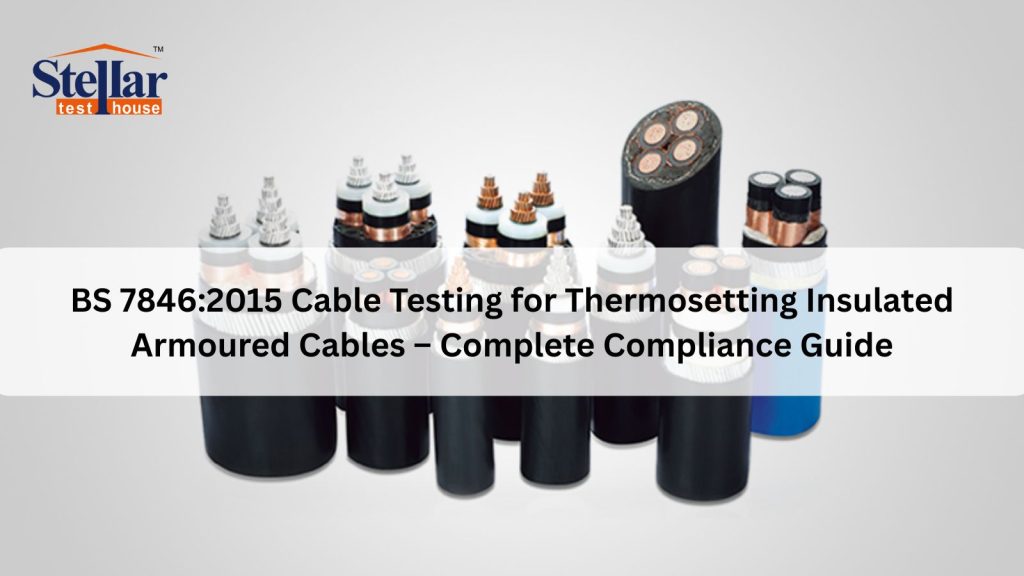
Electrical safety has become a critical requirement in modern infrastructure, especially where fire risk and human safety are major concerns. To address these risks, BS 7846:2015 sets strict performance and safety requirements for thermosetting insulated armoured cables used in fixed installations. These cables are specifically designed to offer low smoke emission and reduced corrosive gas release when exposed to fire.
This guide explains the scope of BS 7846:2015 cable testing, key test requirements, and why compliance is essential for manufacturers, suppliers, and project owners.
What Is BS 7846:2015?
BS 7846:2015 is a British Standard that specifies construction, performance, and fire safety requirements for thermosetting insulated electric cables BS 7846. The standard applies to armoured cables with rated voltages of:
- 600/1000 V
- 1900/3300 V
These cables are commonly used in fixed installations such as:
- Power plants
- Metro and railway systems
- Tunnels and airports
- Commercial and high-rise buildings
The standard focuses on fire performance, electrical integrity, and mechanical durability under demanding conditions.
Why BS 7846:2015 Cable Testing Is Important
During a fire, conventional cables can emit dense smoke and corrosive gases that endanger lives and damage equipment. BS 7846-compliant cables significantly reduce these risks.
BS 7846:2015 cable testing ensures that cables:
- Maintain electrical integrity under fire conditions
- Emit low levels of smoke
- Release minimal corrosive gases
- Perform reliably in safety-critical environments
Compliance not only improves safety but also increases acceptance in international and infrastructure projects.
Scope of Thermosetting Insulated Armoured Cables
Thermosetting insulation offers superior thermal stability compared to thermoplastic materials. When combined with armouring, these cables provide both mechanical protection and fire resistance.
Typical applications include:
- Emergency power circuits
- Fire alarm and evacuation systems
- Essential services in public buildings
- Industrial fixed installations
Key Tests Conducted Under BS 7846:2015
A qualified BS 7846 cable type test laboratory performs a series of electrical, mechanical, and fire-related tests to verify compliance.
1. Fire Performance Testing
Fire performance forms the core of BS 7846. A certified fire-performance electric cables testing lab evaluates:
- Smoke emission characteristics
- Corrosive gas release during combustion
- Flame propagation behavior
These tests help confirm that cables remain safer during fire incidents.
2. Electrical Safety Tests
Electrical testing verifies insulation quality and operational safety.
- Armoured power cables 600/1000 V testing ensures stable performance under rated voltage conditions.
- 1900/3300 V armoured cable safety test validates insulation integrity for higher-voltage installations.
These tests prevent insulation breakdown and electrical failure during service life.
3. Mechanical and Construction Tests
Mechanical tests assess the cable’s ability to withstand installation and operational stress, including:
- Armouring integrity
- Impact resistance
- Dimensional and construction verification
Strong mechanical performance ensures durability in fixed installations.
Role of a BS 7846 Cable Type Test Laboratory
Accurate testing requires specialized equipment, fire test facilities, and technical expertise. A recognized BS 7846 cable type test laboratory conducts testing according to defined procedures and delivers reliable, traceable results.
Manufacturers often prefer third-party testing for armoured cables testing to ensure impartial evaluation and wider market acceptance.
Why Third-Party Testing Adds Value
Independent testing builds trust across supply chains. Third-party testing for armoured cables testing offers:
- Objective compliance verification
- Credible test reports for clients and authorities
- Reduced risk of project rejection
- Better acceptance in international tenders
Many infrastructure projects mandate third-party test evidence before approval.
Common Reasons for Test Failure
Despite good design, some cables fail due to:
- Improper insulation formulation
- Excessive smoke generation
- Weak armouring construction
- Inconsistent manufacturing quality
Pre-compliance testing helps manufacturers identify gaps early and improve product performance.
Benefits of BS 7846:2015 Compliance
Cables tested and certified as per BS 7846:2015 offer clear advantages:
- Improved fire safety and human protection
- Reduced damage to sensitive equipment
- Compliance with global infrastructure requirements
- Stronger brand credibility
These benefits make BS 7846-compliant cables the preferred choice for safety-critical installations.
Conclusion
BS 7846:2015 cable testing plays a vital role in ensuring the safety and reliability of thermosetting insulated armoured cables used in fixed installations. From armoured power cables 600/1000 V testing to 1900/3300 V armoured cable safety test, each evaluation step confirms performance under demanding conditions.
Partnering with an experienced fire-performance electric cables testing lab and opting for third-party testing for armoured cables testing helps manufacturers achieve compliance, reduce risk, and meet the expectations of modern infrastructure projects.