
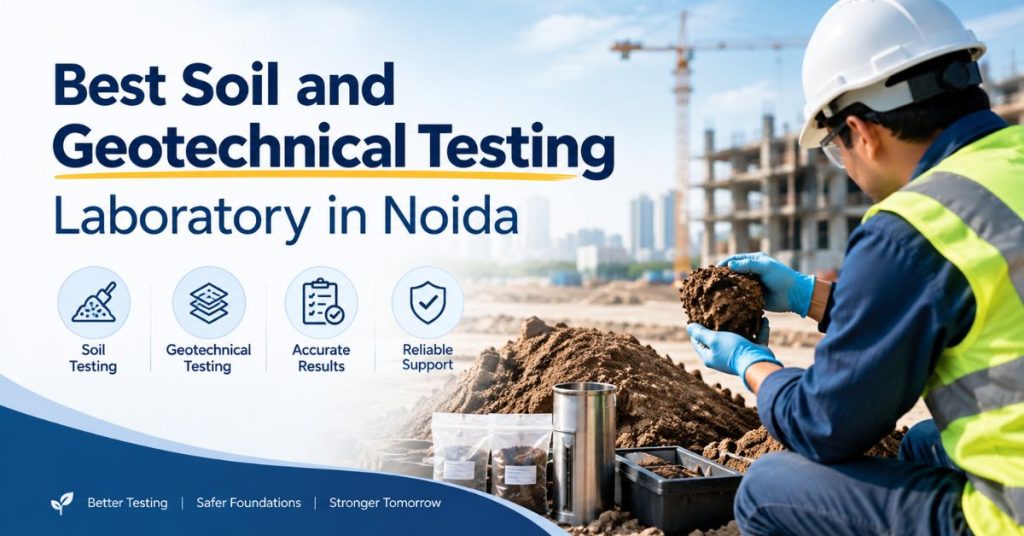
Choosing the right laboratory for soil investigation is an important step before starting any construction project. Whether you are planning a residential building, a commercial complex, an industrial facility, or an infrastructure project, understanding the condition of the soil helps engineers make informed decisions about foundation design and construction safety.
However, not every laboratory offers the same testing facilities, technical expertise, or reporting support. Selecting the Best Soil and Geotechnical testing laboratory requires careful consideration of testing capabilities, applicable standards, accreditation scope, equipment, and project requirements.
If you are looking for a soil testing lab in Noida, this guide explains what to check before selecting a laboratory, which tests may be required, and how to find a suitable testing partner for your construction project.
Why Soil and Geotechnical Testing Matters
Soil conditions can vary considerably from one construction site to another. Factors such as moisture content, soil composition, groundwater conditions, and bearing capacity influence how a foundation performs under structural loads.
Soil and Geotechnical testing helps civil engineers and geotechnical professionals understand these characteristics before finalising construction plans. The findings support foundation design, earthwork planning, slope stability assessment, and other engineering decisions.
Without appropriate soil investigation, a project may face unexpected settlement, foundation problems, drainage difficulties, or additional construction costs. Proper testing helps identify potential ground-related issues at an early stage.
For builders, contractors, consultants, and infrastructure developers, selecting a reliable testing laboratory is therefore an important part of project planning.
1. Understand Your Project’s Soil Testing Requirements
Before contacting a laboratory, identify the purpose of the investigation. Different projects require different testing parameters, depending on site conditions, structural requirements, and engineering specifications.
For example:
- Residential and commercial buildings: Soil properties relevant to foundation design and settlement assessment.
- Roads and highways: Soil classification, compaction characteristics, and subgrade performance.
- Industrial facilities: Soil characteristics suitable for the proposed structures and foundation requirements.
- Earthwork and embankments: Compaction, moisture content, and relevant strength characteristics.
- Infrastructure projects: Geotechnical investigation based on the project’s design criteria and ground conditions.
Discuss your project details with the laboratory or your geotechnical consultant. This helps establish which tests are necessary instead of paying for tests that do not contribute to the engineering assessment.
2. Check the Laboratory’s Testing Capabilities
One of the most important factors when selecting a geotechnical testing laboratory is the range of relevant tests it can perform.
Depending on the project requirements, common soil testing parameters may include:
- Natural moisture content
- Grain size analysis
- Atterberg limits
- Specific gravity of soil solids
- Standard or modified Proctor compaction
- California Bearing Ratio (CBR)
- Direct shear testing
- Unconfined compressive strength, where applicable
- Consolidation testing
- Permeability testing
Not every project requires all these tests. The selection depends on soil type, construction activity, engineering specifications, and the recommendations of the responsible geotechnical professional.
Ask the laboratory whether it performs the required tests in-house, follows the applicable test methods, and can provide the results in a format suitable for your project documentation.
3. Verify Accreditation, Recognition, and Technical Scope
Laboratory credentials are an important part of the selection process, particularly when test reports must meet contractual, regulatory, or project-specific requirements.
Before making a decision, check the following:
- Whether the laboratory holds relevant accreditation, if required.
- Whether the specific soil tests are covered within its approved accreditation scope.
- Whether the laboratory follows the applicable IS, ASTM, or other specified test methods.
- Whether its reports include the necessary test details, results, and identification information.
- Whether any additional approval or recognition is required by the client or project authority.
If your project requires an accredited report, do not rely only on a logo or a general accreditation statement. Verify that the particular test and method fall within the laboratory’s current scope.
These checks can help you identify the Best Soil and Geotechnical testing partner for your project’s actual technical requirements.
4. Compare Testing Charges and Reporting Timelines
Testing cost is another consideration when choosing a soil testing laboratory in Noida. However, the lowest quotation may not always provide the best value.
The final cost can depend on the number of samples, types of tests, sample preparation, testing complexity, reporting requirements, and transportation arrangements.
When requesting a quotation, ask for:
- Individual test charges or a detailed testing package
- Sample quantity and preparation requirements
- Expected report delivery time
- Sample collection or transportation charges, if applicable
- Additional charges for urgent testing, if offered
- Any project-specific documentation requirements
A written quotation helps you compare laboratories on a consistent basis. It also reduces the possibility of unexpected expenses during the testing process.
Reporting timelines should be realistic and appropriate for the tests involved. Complex tests may require more time than routine index-property testing.
5. Look for Proper Equipment and Qualified Technical Staff
Reliable test results depend on appropriate equipment, trained personnel, suitable testing procedures, and quality-control practices.
When evaluating a laboratory, ask about its testing facilities and experience with the type of soil investigation your project requires.
A capable laboratory should be able to explain its testing methods, identify relevant standards, and clarify the limitations of individual results. It should also maintain appropriate records for sample identification and test traceability.
For projects with demanding technical requirements, discuss the testing plan with the laboratory before sending samples. This step can help avoid incomplete test schedules or delays caused by incorrect sample preparation.
6. Understand Sample Collection and Submission Procedures
Accurate testing begins with proper sampling and sample handling. Even a well-equipped laboratory may produce results that do not adequately represent the site if samples are collected, labelled, or transported incorrectly.
Before submitting samples, confirm:
- The required sample type and quantity for each test.
- Whether disturbed or undisturbed samples are needed.
- The appropriate containers, packaging, and preservation requirements.
- The information that must accompany each sample.
- The procedure for identifying the project location and sample depth.
Some laboratory tests require specific sample conditions, so follow the laboratory’s instructions and the recommendations of the geotechnical professional.
For a comprehensive site investigation, laboratory testing should be considered alongside field investigation and engineering interpretation. Laboratory results alone do not replace a site-specific geotechnical assessment.
7. How to Find a Govt Soil Testing Lab Near Me
Many project owners and contractors search online for a govt soil testing lab near me because they want to understand available testing facilities and applicable requirements.
Government laboratories, private laboratories, and accredited testing facilities may serve different purposes. The appropriate choice depends on the tests required, report acceptance criteria, availability, cost, and project specifications.
When comparing options, consider:
- Whether the facility offers the required soil tests.
- Whether its reports are accepted by your client or relevant authority.
- Whether the applicable accreditation or approval requirements are satisfied.
- Whether the location and expected turnaround time suit your project.
- Whether the laboratory can provide the documentation you need.
A government-operated facility is not automatically suitable for every commercial project, and a private laboratory is not automatically approved for every purpose. Verify the specific requirements before placing an order.
If your project specifies accredited testing, confirm the current accreditation scope and report acceptance requirements rather than relying solely on the laboratory’s ownership or location.
8. Choose a Soil Testing Lab in Noida That Understands Construction Requirements
For projects in Noida and the wider Delhi NCR region, choosing a laboratory that understands construction-related testing requirements can make communication and project coordination easier.
When evaluating a soil testing lab in Noida, consider its location, available testing services, technical support, sample submission process, and ability to meet project documentation requirements.
Ask whether the laboratory can coordinate the required testing schedule and provide a clear explanation of its findings. For larger projects, share the relevant technical specifications, drawings, or test schedule before requesting a quotation.
This approach helps the laboratory understand your requirements and provide a more appropriate testing proposal.
9. Common Mistakes to Avoid When Selecting a Laboratory
Some common mistakes can lead to unnecessary expenses, delays, or reports that do not meet project requirements.
Choosing only on price: A low quotation may not include every required test or the documentation specified in your contract.
Ignoring the accreditation scope: General accreditation does not mean every test offered by a laboratory is accredited.
Ordering unnecessary tests: Test selection should follow the project’s engineering requirements rather than a generic package.
Providing poorly identified samples: Incorrect sample labels or missing site details can affect traceability and delay reporting.
Overlooking report acceptance: Confirm whether your client, consultant, or relevant authority accepts the proposed laboratory and testing method.
Treating laboratory results as a complete design: Foundation design requires appropriate engineering assessment, and laboratory results must be interpreted in the context of site conditions and project requirements.
Avoiding these mistakes makes it easier to select a laboratory that meets both technical and commercial expectations.
Why Choose Stellar Test House for Testing Requirements?
Stellar Test House provides testing services for a range of construction and industrial materials. If you are evaluating laboratories for a project in Noida or Delhi NCR, you can discuss your specific requirements with the team to determine the availability of relevant soil and geotechnical tests.
Before placing an order, confirm the required test methods, applicable standards, accreditation scope where relevant, sample submission procedure, charges, and expected reporting timeline.
The right laboratory selection process should be based on your project’s technical requirements rather than promotional claims alone.
For current service availability and a quotation, contact Stellar Test House through its official website: https://stellartesthouse.com/
Compare the laboratory’s relevant testing capabilities, accreditation scope, test methods, equipment, reporting process, technical support, and charges. Confirm that its reports meet your project’s requirements before submitting samples.
2. What tests are performed by a geotechnical testing laboratory?
Common tests include moisture content, grain size analysis, Atterberg limits, compaction, CBR, shear strength, consolidation, and permeability testing. The exact selection depends on the soil conditions and the purpose of the investigation.
3. How can I find a soil testing lab in Noida?
Search for laboratories offering the specific tests you need, review their technical capabilities, and contact them for quotations and sample submission instructions. Verify any required accreditation and report acceptance criteria.
4. Is a government soil testing laboratory always better than a private laboratory?
Not necessarily. Both government and private facilities may be suitable, depending on the project, test availability, report requirements, and applicable approvals. Verify the specific requirements before choosing a laboratory.
5. What information should I provide when requesting a soil testing quotation?
Provide the project location, type of construction, number and type of samples, required tests, applicable specifications, reporting deadline, and any client or consultant requirements.
6. Why is geotechnical testing important before construction?
Geotechnical testing helps establish relevant soil properties for engineering assessment and foundation planning. It supports decisions about ground conditions, compaction, strength, settlement, and other project-specific considerations.
7. Can soil testing results determine the foundation design?
Soil testing results provide important input for foundation design, but they should be interpreted with field investigation findings, structural loads, groundwater conditions, and the recommendations of a qualified geotechnical engineer.
Conclusion
Selecting the right laboratory is an important step in planning a safe and well-documented construction project. From checking testing capabilities and accreditation scope to comparing quotations and understanding sample requirements, each step contributes to a more informed decision.
If you are searching for the Best Soil and Geotechnical testing services, focus on technical suitability, transparent communication, applicable standards, and reliable reporting. Whether you are comparing a soil testing lab in Noida, researching a geotechnical testing laboratory, or looking for a govt soil testing lab near me, verify that the facility can meet your project’s specific requirements.
A well-planned testing process helps construction professionals make better-informed engineering decisions and manage project requirements more effectively.