
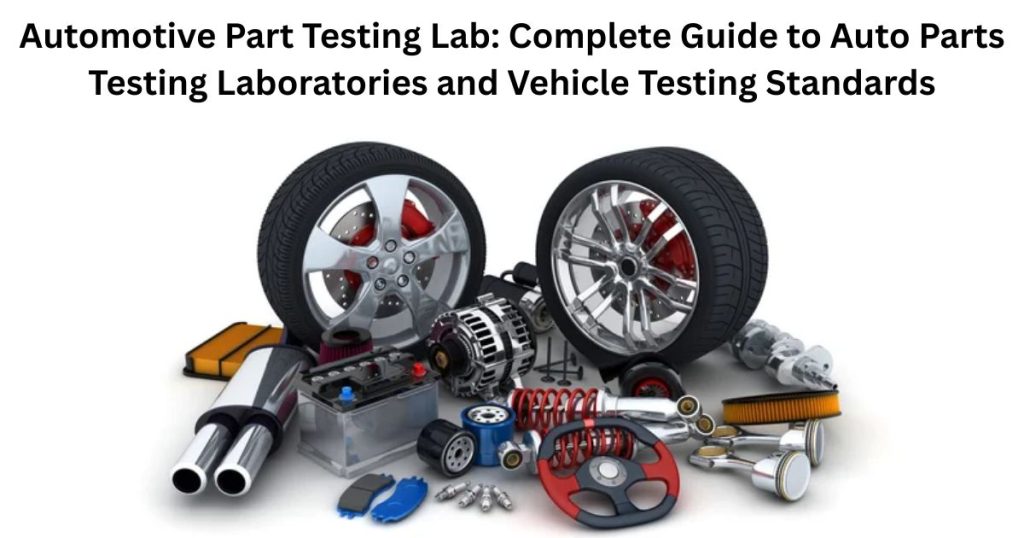
The automotive industry depends on precision, safety, and reliability. Every component in a vehicle—from a small fastener to a complex electronic control unit—must perform consistently under demanding conditions. A single defective part can affect vehicle performance, compromise safety, and lead to costly recalls. This is why automotive part testing Lab has become an essential part of the manufacturing and quality assurance process.
Automotive manufacturers, suppliers, and component developers rely on professional auto parts testing laboratories to verify product quality, durability, and compliance with industry standards. These testing procedures help ensure that components can withstand real-world operating conditions while meeting regulatory requirements.
This guide explores the importance of automotive testing, the types of components evaluated, common testing methods, certification standards, and how to select the right testing laboratory for your needs.
What is Automotive Part Testing?
Automotive part testing is the process of evaluating vehicle components to determine their safety, functionality, durability, reliability, and compliance with established standards. Testing helps manufacturers identify potential weaknesses before products enter the market.
An automotive testing lab uses specialized equipment and controlled environments to simulate real-world operating conditions. Components are subjected to mechanical, electrical, thermal, chemical, and environmental stresses to assess their performance.
The primary objective of testing is to ensure that automotive parts function as intended throughout their expected service life. Whether a component is designed for passenger vehicles, commercial trucks, electric vehicles, or off-road equipment, thorough testing helps maintain quality and reliability.
Why Auto Parts Testing is Important
The automotive sector operates under strict safety and quality requirements. Testing plays a critical role in meeting these expectations.
Enhances Vehicle Safety
Vehicle safety depends on the reliability of every component. Testing helps identify defects that could lead to failures, accidents, or operational hazards.
Improves Product Quality
Testing provides valuable data that manufacturers can use to improve designs, materials, and production processes. This leads to higher-quality products and better customer satisfaction.
Supports Regulatory Compliance
Automotive components must meet national and international regulations. Testing verifies compliance with applicable standards before products reach the market.
Reduces Warranty Claims
Reliable testing identifies potential issues early in the development process. Manufacturers can address these problems before mass production, reducing warranty costs and product returns.
Increases Customer Confidence
Consumers expect vehicles and components to perform safely and consistently. Verified testing results help build trust in automotive brands and products.
Minimizes Recall Risks
Product recalls can result in financial losses and reputational damage. Comprehensive testing helps manufacturers detect problems before products are distributed.
Types of Automotive Components Tested
A professional auto parts testing laboratory evaluates a wide variety of automotive components.
Engine Components
Engine parts operate under extreme temperatures and pressures. Commonly tested components include pistons, valves, crankshafts, connecting rods, and cylinder heads.
Brake Systems
Brake components must perform reliably under demanding conditions. Testing often includes brake pads, discs, drums, hydraulic systems, and related assemblies.
Suspension and Steering Components
These systems directly affect vehicle handling and stability. Testing helps verify strength, durability, and performance under various load conditions.
Electrical and Electronic Components
Modern vehicles contain sophisticated electronic systems. Components such as sensors, wiring harnesses, batteries, controllers, and electronic modules undergo extensive evaluation.
Interior Components
Seats, dashboards, trim materials, switches, and control systems are tested for durability, safety, and long-term performance.
Exterior Components
Bumpers, mirrors, lighting systems, body panels, and protective coatings are evaluated to ensure durability and environmental resistance.
Tires and Wheels
Tires and wheels experience significant mechanical stress. Testing assesses load capacity, wear resistance, structural integrity, and performance.
Battery Systems
Electric and hybrid vehicles rely heavily on battery technology. Testing verifies safety, efficiency, thermal performance, and lifecycle durability.
Common Tests Performed by Automotive Testing Labs
Professional automotive testing labs perform various assessments based on component type and intended application.
Mechanical Testing
Mechanical testing evaluates the physical strength and durability of components.
Common methods include:
- Tensile testing
- Compression testing
- Flexural testing
- Impact testing
- Hardness testing
- Fatigue testing
These tests help determine whether a component can withstand operational loads and stresses.
Vibration Testing
Vehicles operate in environments where constant vibration occurs. Vibration testing simulates real-world conditions to identify potential weaknesses and performance issues.
Thermal Testing
Automotive components often face significant temperature fluctuations. Thermal testing assesses performance under extreme heat and cold conditions.
Corrosion Testing
Exposure to moisture, chemicals, road salts, and pollutants can cause corrosion. Testing helps evaluate material resistance and protective coating effectiveness.
Environmental Testing
Environmental testing examines component performance under varying humidity, temperature, dust, water exposure, and other environmental factors.
Electrical Testing
Electrical systems require reliable operation throughout a vehicle’s lifespan. Testing may include:
- Insulation resistance testing
- Voltage testing
- Current testing
- Electromagnetic compatibility (EMC) testing
- Electrical safety testing
Chemical Analysis
Chemical testing verifies material composition and identifies contaminants that could affect performance or durability.
Durability Testing
Durability assessments simulate long-term use to determine expected service life and maintenance requirements.
Performance Testing
Performance testing evaluates whether components function according to design specifications under normal and extreme operating conditions.
Automotive Testing Standards and Certifications
Testing laboratories follow recognized standards to ensure consistency, accuracy, and industry acceptance.
ISO Standards
Many automotive manufacturers operate under ISO quality management frameworks. ISO standards support consistent production and testing processes.
IATF 16949
IATF 16949 is one of the most widely recognized quality management standards in the automotive industry. It focuses on continuous improvement and defect prevention.
AIS Standards
Automotive Industry Standards (AIS) establish technical requirements for vehicles and components in India.
SAE Standards
The Society of Automotive Engineers (SAE) develops technical standards used globally across the automotive sector.
ASTM Standards
ASTM standards define testing procedures for materials, products, systems, and services used in automotive manufacturing.
ISO/IEC 17025
Testing laboratories often operate under ISO/IEC 17025 accreditation, which demonstrates technical competence and testing reliability.
Compliance with these standards helps manufacturers gain market acceptance and satisfy regulatory requirements.
Benefits of Working with an Auto Parts Testing Laboratory
Partnering with a professional auto parts testing laboratory offers several advantages.
Access to Advanced Testing Equipment
Modern laboratories use sophisticated instruments capable of performing highly accurate evaluations.
Expert Technical Knowledge
Experienced engineers and testing specialists provide valuable insights into product performance and potential improvements.
Reliable Test Results
Accredited laboratories follow established procedures to ensure accuracy, consistency, and repeatability.
Faster Product Development
Testing helps manufacturers identify issues early, reducing development time and accelerating product launches.
Regulatory Support
Testing laboratories assist businesses in meeting certification requirements and industry regulations.
Cost Savings
Early detection of design flaws and manufacturing defects helps prevent expensive failures, recalls, and warranty claims.
How to Choose the Best Automotive Testing Labs
Selecting the right testing partner is crucial for obtaining reliable results.
Verify Accreditation
Choose laboratories that maintain recognized accreditations such as ISO/IEC 17025. Accreditation demonstrates technical competence and quality management.
Review Testing Capabilities
Ensure the laboratory can perform the specific tests required for your components and applications.
Evaluate Industry Experience
Automotive testing requires specialized knowledge. Laboratories with extensive automotive experience often deliver better support and insights.
Assess Equipment and Infrastructure
Modern testing equipment improves accuracy and enables more comprehensive evaluations.
Check Reporting Quality
Detailed and professionally prepared reports simplify compliance documentation and support decision-making.
Consider Turnaround Time
Testing schedules can affect product launches and project timelines. Discuss expected completion times before starting a project.
Review Customer Support
Responsive communication and technical assistance contribute to a smoother testing experience.
Industries That Require Automotive Testing
Automotive testing serves numerous industries beyond vehicle manufacturing.
Passenger Vehicle Manufacturers
Automakers rely on testing to validate components, systems, and complete vehicles.
Commercial Vehicle Sector
Heavy-duty trucks, buses, and fleet vehicles require extensive testing to ensure reliability and safety.
Auto Component Manufacturers
Suppliers must verify product quality before delivering components to vehicle manufacturers.
Electric Vehicle Industry
The rapid growth of electric vehicles has increased demand for battery, charging system, and electronic component testing.
Defense and Specialized Vehicles
Military and specialized transportation systems operate in demanding environments and require rigorous testing.
Motorsports Industry
High-performance racing vehicles depend on advanced testing to maximize reliability and performance.
Future Trends in Automotive Testing
The automotive industry continues to evolve rapidly, creating new testing requirements and opportunities.
Growth of Electric Vehicles
Battery performance, thermal management, and charging systems have become major testing priorities as electric vehicle adoption increases.
Advanced Driver Assistance Systems (ADAS)
Modern vehicles increasingly rely on sensors, cameras, radar, and software. Testing ensures these systems function accurately and safely.
Connected Vehicle Technologies
Connected vehicles require testing for cybersecurity, communication reliability, and software performance.
Sustainability and Environmental Compliance
Manufacturers are focusing on environmentally responsible materials and production processes, leading to increased sustainability testing.
Automation and Digital Testing
Advanced simulation tools, data analytics, and automated testing systems are improving testing efficiency and accuracy.
Conclusion
Automotive part testing is a critical process that supports vehicle safety, product reliability, regulatory compliance, and customer satisfaction. From mechanical components and brake systems to advanced electronics and battery technologies, every automotive part must perform consistently under real-world conditions.
Professional automotive testing labs provide the expertise, equipment, and technical capabilities needed to validate component performance and ensure compliance with industry standards. By partnering with a trusted auto parts testing laboratory, manufacturers and suppliers can improve product quality, reduce risks, and strengthen their position in a highly competitive market.
As automotive technologies continue to advance, comprehensive testing will remain a key factor in delivering safer, smarter, and more reliable vehicles for the future.