
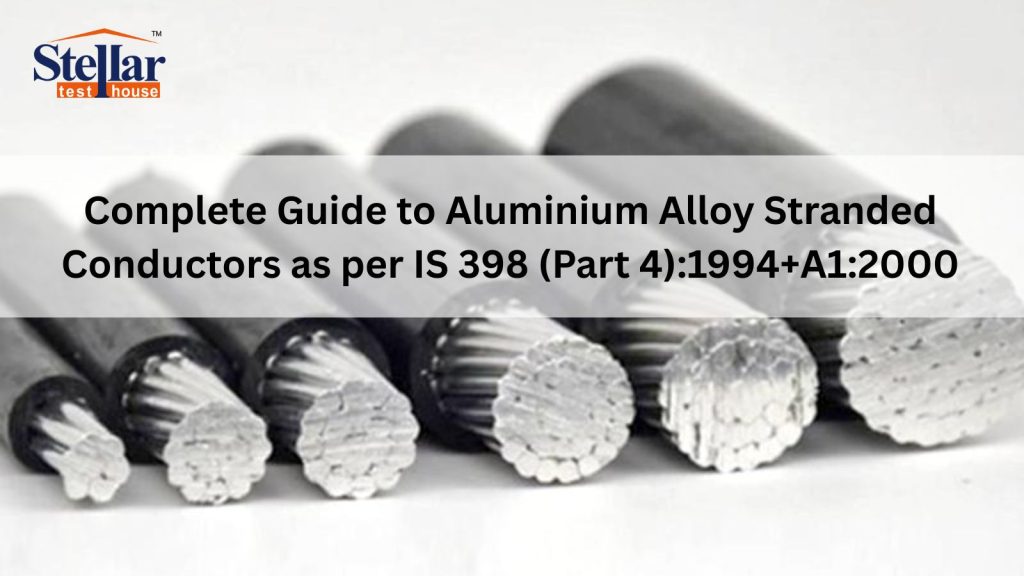
Aluminium Alloy Stranded Conductors play a critical role in modern power transmission and distribution systems. Designed for strength, durability, and efficiency, these conductors are manufactured using Aluminium-Magnesium-Silicon alloy and are governed by IS 398 (Part 4):1994 with Amendment A1:2000. This standard ensures consistent performance, safety, and reliability across overhead electrical networks.
In this guide, we will explore the specifications, advantages, applications, and testing requirements of these conductors, along with the importance of choosing a reliable IS 398 Testing Lab.
What Are Aluminium Alloy Stranded Conductors?
Aluminium Alloy Stranded Conductors, commonly known as AAAC (All Aluminium Alloy Conductors), are made from aluminium alloy containing magnesium and silicon. This combination improves mechanical strength without significantly compromising electrical conductivity.
Unlike conventional aluminium conductors, AAAC conductors provide better resistance to corrosion and higher tensile strength, making them suitable for long-span overhead lines.
IS 398 (Part 4):1994+A1:2000 – An Overview
The Indian Standard IS 398 Part 4 specifies the requirements for aluminium alloy stranded conductors used in overhead power transmission. The amendment A1:2000 further refines performance and quality parameters.
Key aspects covered under the standard:
- Chemical composition of aluminium alloy
- Construction and stranding details
- Electrical resistance limits
- Tensile strength and elongation
- Dimensional tolerances
- Routine and type testing requirements
Compliance with this standard is essential for utilities, EPC contractors, and manufacturers involved in power infrastructure projects.
Key Advantages of Aluminium Magnesium Silicon Conductors
Aluminium-Magnesium-Silicon conductors offer several technical and economic benefits:
- High strength-to-weight ratio
- Improved sag performance in long spans
- Excellent corrosion resistance in coastal and industrial areas
- Lower maintenance costs
- Longer service life compared to traditional conductors
These properties make them a preferred choice for overhead transmission lines across India.
Applications of AAAC Conductors
Aluminium Alloy Stranded Conductors are widely used in:
- Overhead power transmission lines
- Urban and rural power distribution networks
- Railway electrification projects
- Industrial and utility power systems
- Areas with high corrosion exposure
Their lightweight nature also reduces tower loading, which helps in optimizing structural design.
Importance of Testing as per IS 398 Part 4
Testing ensures that the conductor meets all mechanical, electrical, and chemical requirements defined in the standard. Without proper testing, conductor failure risks increase, leading to power losses and safety concerns.
Common tests include:
- Tensile strength test
- Electrical resistance test
- Wrapping and bending test
- Chemical composition analysis
- Dimensional and visual inspection
Some tests are performed routinely, while others are conducted as type or acceptance tests.
Choosing the Right Aluminium Alloy Conductor Testing Laboratory
Selecting a competent testing facility is essential for accurate and compliant results. A professional Aluminium Alloy Conductor Testing Laboratory uses calibrated equipment, trained personnel, and standard testing procedures.
If you are located in or around NCR, choosing an Aluminium Alloy Conductor Testing Lab Noida provides faster turnaround and local technical support.
Specialized Testing Services in Noida
A reputed AAAC Conductor Testing Laboratory Noida offers comprehensive testing services for manufacturers, suppliers, and project developers. These labs also function as an Aluminium Magnesium Silicon Testing Lab, ensuring precise alloy composition verification.
For projects requiring strict compliance, IS 398 Pt 4 Conductor Testing Noida facilities help ensure that conductors meet tender and regulatory requirements without delays.
Testing accuracy is maintained through documented procedures, and results are delivered in clear, traceable reports.
Why IS 398 Testing Lab Compliance Matters
Compliance with an accredited IS 398 Testing Lab builds trust among utilities, consultants, and government agencies. It also reduces rejection risks during inspections and project audits.
Quality assurance through proper testing protects long-term system performance and enhances operational reliability.
Conclusion
Aluminium Alloy Stranded Conductors as per IS 398 (Part 4):1994+A1:2000 are a reliable solution for modern power transmission needs. Their superior mechanical properties, corrosion resistance, and long service life make them a preferred choice across diverse environments.
However, performance begins with quality assurance. Partnering with a trusted Aluminium Alloy Conductor Testing Laboratory, especially a well-equipped testing lab in Noida, ensures compliance, safety, and confidence in every installation.