
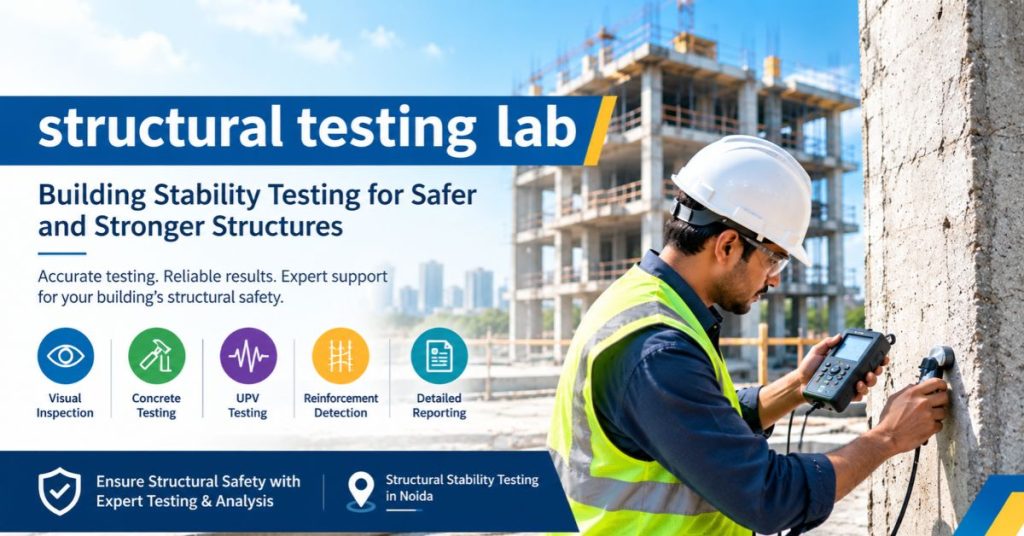
A building may look strong from the outside, but its actual safety depends on the condition of its foundation, columns, beams, slabs, and other structural components. Over time, ageing, moisture, poor construction practices, excessive loads, and environmental conditions can affect a building’s strength. That is why structural stability testing plays an important role in assessing the safety and reliability of residential, commercial, and industrial buildings.
Whether you own a house, manage a commercial property, or operate an industrial facility, understanding the condition of your building can help you identify potential structural problems before they become serious. A professional structural testing lab can assess the building’s condition using suitable inspection techniques and engineering tests.
For property owners and businesses looking for structural stability testing in Noida, a professional assessment can provide valuable information about structural defects, material condition, and the need for further investigation or repair.
In this guide, we will explain how structural stability testing works, which methods engineers use, when a building needs an assessment, and how to choose a suitable testing laboratory.
What Is Structural Stability Testing?
Structural stability testing is the process of evaluating a building’s structural condition, strength, and ability to safely withstand the loads it experiences. Engineers examine structural components and assess whether the building shows signs of damage, deterioration, or other conditions that could affect its stability.
The assessment may include a visual inspection, a review of available structural drawings, concrete testing, reinforcement checks, and other investigations based on the building’s condition and assessment requirements.
Structural stability testing of buildings is particularly useful for older properties, buildings with visible cracks, industrial structures, commercial complexes, and properties undergoing renovation or changes in use.
The exact testing procedure depends on several factors, including the building’s age, construction materials, structural design, observed defects, and intended use. No single test can establish the safety of every building. Engineers interpret the findings together to develop an appropriate assessment.
Why Is Structural Stability Testing Important?
Regular structural assessment helps property owners understand the condition of their buildings and make informed maintenance decisions. It can also help identify issues that may not be visible during an ordinary walk-through.
1. Identifies Structural Damage
Cracks in beams, columns, slabs, and walls may indicate different types of problems. While some cracks result from plaster shrinkage or surface movement, others may require a detailed structural investigation.
A professional assessment helps determine the possible cause and whether further testing is necessary.
2. Evaluates Concrete and Structural Components
Concrete quality, reinforcement condition, corrosion, and deterioration can influence a building’s performance. Suitable tests help engineers investigate these factors and evaluate the condition of structural elements.
3. Supports Maintenance and Repair Planning
Building owners often spend money on repairs without knowing the underlying cause of a problem. Structural assessment helps identify areas that require attention and supports better-informed decisions about repair and maintenance.
4. Helps Assess Older Buildings
Ageing buildings may experience deterioration due to moisture penetration, corrosion, repeated loading, or inadequate maintenance. Structural stability testing of buildings can help determine whether further investigation, strengthening, or repair may be required.
5. Supports Renovation and Changes in Building Use
Adding floors, installing heavy equipment, changing the use of a space, or modifying structural elements can affect the loads acting on a building. An engineering assessment helps determine whether the proposed changes require additional structural analysis.
Common Methods Used for Structural Stability Testing
A qualified engineer selects testing methods according to the building’s materials, condition, and assessment objectives. The following techniques may form part of a structural investigation.
1. Visual Structural Inspection
Visual inspection is often the first step in assessing a building. Engineers examine accessible structural components for visible cracks, deformation, corrosion, dampness, spalling concrete, and other signs of deterioration.
They may also review the building’s history, previous repair work, available drawings, and reports of unusual movement.
Visual inspection provides important initial information, but it cannot reveal every hidden defect or establish structural capacity on its own.
2. Rebound Hammer Test
A rebound hammer test evaluates the surface hardness of concrete. Engineers use the readings to assess variations in concrete quality and identify areas that may need further investigation.
The results do not directly establish the compressive strength of concrete in every situation. Engineers interpret them alongside other relevant information and, where appropriate, additional tests.
3. Ultrasonic Pulse Velocity (UPV) Test
The Ultrasonic Pulse Velocity test measures how quickly an ultrasonic pulse travels through concrete. Engineers use the results to investigate concrete uniformity and identify possible internal discontinuities under suitable testing conditions.
UPV testing can complement other concrete assessment methods, particularly when engineers need information about the condition of existing structural elements.
4. Concrete Core Testing
Concrete core testing involves extracting small cylindrical samples from selected locations and testing them in a laboratory. The test can provide a direct measurement of the compressive strength of the sampled concrete.
Engineers determine the appropriate sampling locations and evaluate the effect of drilling on the structure before taking cores. The findings must be interpreted in the context of the building’s overall structural design and condition.
5. Reinforcement Detection
Reinforcement detection techniques help identify the approximate location and cover of steel reinforcement inside concrete. Depending on the equipment and investigation requirements, they may also provide estimates of reinforcement size.
This information can support assessments of reinforced concrete beams, columns, and slabs, particularly when drawings are unavailable or when engineers need to investigate existing construction.
6. Structural Analysis and Load Assessment
Engineers may review structural drawings, material test results, dimensions, loading conditions, and observed defects to evaluate the building’s performance.
Depending on the project, the investigation may require calculations, modelling, load assessment, or other specialist examinations. These activities help engineers determine whether the structure meets the applicable assessment criteria.
A structural testing lab may provide material testing and technical findings that support this process, while the overall structural safety conclusion requires appropriate engineering evaluation.
When Should You Consider Structural Stability Testing?
Do not wait for visible damage to become severe before seeking professional advice. Consider arranging an assessment when:
- Your building has developed new or widening cracks in structural elements.
- Concrete is breaking, flaking, or exposing corroded reinforcement.
- Doors and windows suddenly become difficult to operate alongside other signs of movement.
- The building has experienced fire, flooding, impact, or another significant event.
- You plan to add another floor or install heavy machinery.
- An older building requires a condition assessment before renovation or continued use.
- You need technical information to plan structural repairs or strengthening.
These signs do not automatically mean that a building is unsafe. However, they may indicate a need for further investigation.
Important: If you notice major structural cracks, sudden deformation, falling concrete, or other signs of possible immediate danger, keep people away from the affected area and seek urgent advice from a qualified structural engineer and the appropriate local authorities.
Structural Stability Testing in Noida
Noida has a wide range of residential buildings, offices, commercial properties, industrial facilities, and construction projects. Each type of structure has different assessment requirements depending on its design, age, materials, and intended use.
Businesses and property owners looking for structural stability testing in Noida should choose a service provider that understands the purpose of the investigation and can recommend appropriate testing methods.
Before selecting a laboratory or engineering service, consider the following:
- Relevant experience: Check whether the provider has experience with the type of structure and tests involved.
- Suitable testing methods: Confirm that the proposed tests address the specific concerns identified during the initial assessment.
- Technical reporting: Ask whether the service includes clear test results, relevant limitations, and supporting technical documentation.
- Applicable standards: Verify the standards and procedures relevant to your building and the requested tests.
- Engineering support: Clarify who will interpret the findings and whether a qualified structural engineer will prepare or review the final assessment.
Choosing the right service provider helps you obtain useful technical information instead of relying on assumptions about the building’s condition.
What Factors Affect the Cost of Structural Stability Testing?
The cost of structural stability testing varies from one building to another. A small residential property may require a different scope of work from a large industrial facility or commercial complex.
Common cost factors include:
Building size and complexity: Larger or more complex structures may require more inspection time and investigation.
Number of test locations: The number of beams, columns, slabs, concrete samples, or other elements examined can affect the overall cost.
Testing methods: Visual inspection, non-destructive testing, core sampling, and specialist investigations have different equipment and resource requirements.
Accessibility: Difficult-to-reach areas may require additional access arrangements or safety measures.
Reporting requirements: Detailed engineering analysis, drawings, calculations, and specialist reports may increase the scope of work.
For an accurate estimate, share the building’s location, approximate size, age, purpose of testing, and any known structural concerns with the service provider. Request a clear quotation that explains the tests and deliverables included.
How to Choose the Right Structural Testing Lab
Selecting a suitable structural testing lab is an important step in obtaining reliable test results for a building assessment.
Before confirming a service, ask these questions:
- Does the laboratory offer the specific tests required for my project?
- Are the relevant tests covered by its current accreditation scope, where accreditation is required?
- Which testing standards and procedures will be followed?
- Will I receive a technical report identifying the tests performed and the results obtained?
- Who will evaluate the results and advise on the building’s structural condition?
- Does the proposed assessment cover the actual concerns identified at the site?
Do not select a laboratory based on price alone. The suitability of the testing methods, competence of the personnel, quality of reporting, and clarity of the assessment scope are equally important.
Also, laboratory accreditation for an individual test does not automatically mean that the laboratory is accredited for every structural assessment service. Verify the current scope before making a decision.
Get Professional Guidance for Structural Stability Testing
Understanding the condition of a building is an important part of protecting people, property, and long-term investment. A suitable combination of inspection, testing, and engineering evaluation can help identify potential concerns and guide decisions about maintenance, repair, or further investigation.
If you are looking for a structural testing lab or require structural stability testing in Noida, contact Stellar Test House to discuss your testing requirements. Share details about your building, its location, and the reason for the assessment so that the appropriate testing scope can be identified.
Contact Stellar Test House
- Address: G-68, G-Block, Sector 63, Noida, Uttar Pradesh – 201301
- Website: https://stellartesthouse.com/
- Email: [email protected]
Contact the team to discuss the relevant testing services, applicable standards, and technical requirements for your project.
Note: Testing availability, accreditation scope, and the provision of a complete structural stability assessment should be confirmed with the service provider before booking.
Frequently Asked Questions (FAQs)
1. What is structural stability testing of buildings?
Structural stability testing of buildings involves inspecting and evaluating structural components to investigate their condition, material properties, and potential defects. Depending on the project, it may include visual inspection, concrete testing, reinforcement detection, and engineering analysis.
2. Which tests are used to assess building stability?
Commonly used methods include visual inspection, rebound hammer testing, Ultrasonic Pulse Velocity testing, concrete core testing, reinforcement detection, and structural analysis. Engineers select the appropriate combination according to the building’s condition and assessment requirements.
3. When should a building undergo structural stability testing?
An assessment may be necessary when a building develops significant cracks, shows concrete deterioration, experiences an unusual event, undergoes major renovation, or requires evaluation because of its age or intended use.
4. How can I find structural stability testing in Noida?
Start by identifying the type of building and the reason for testing. Then contact a suitable laboratory or engineering service provider, explain your requirements, and confirm the available testing methods, applicable standards, reporting arrangements, and engineering support.
5. Does a concrete test alone confirm that a building is safe?
No. A concrete test provides information about a particular material property or condition. Overall structural safety depends on several factors, including design, loads, reinforcement, foundations, connections, deterioration, and the interpretation of test results by a qualified professional.
6. How much does structural stability testing cost?
The cost depends on the building’s size, complexity, accessibility, number of tests, testing methods, and reporting requirements. A service provider can prepare a more accurate quotation after reviewing the project details.