
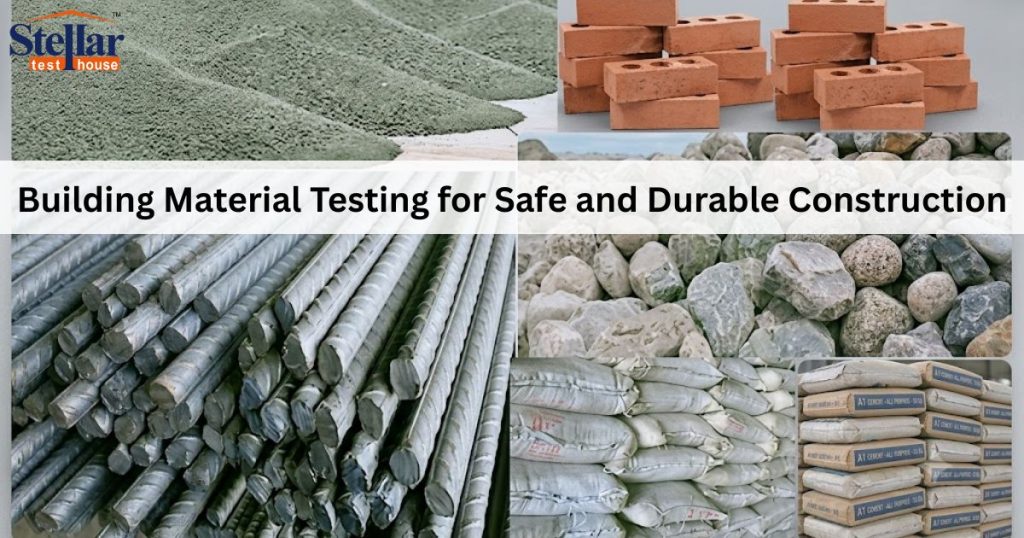
Modern construction projects demand more than quality design and skilled workmanship. The long-term safety, durability, and performance of any structure largely depend on the quality of materials used during construction. From cement and concrete to steel, bricks, aggregates, and soil, every construction material must meet specific quality standards before being incorporated into a project.
This is where Building Material Testing becomes essential. Material testing helps engineers, contractors, builders, architects, and project owners verify that construction materials meet required specifications and perform as expected under real-world conditions.
Whether it is a residential building, commercial tower, industrial facility, bridge, highway, or infrastructure project, testing construction materials before and during construction significantly reduces risks and improves structural reliability.
What is Building Material Testing?
Building Material Testing is the process of evaluating the physical, chemical, and mechanical properties of construction materials to determine their suitability for a project.
Testing helps identify whether materials comply with industry standards, design requirements, and safety regulations. It also ensures consistency in quality throughout the construction process.
A professional construction material test lab performs various tests on materials such as:
The results help stakeholders make informed decisions and prevent costly construction failures.
Why Building Material Testing is Important
Construction defects often arise due to poor-quality materials rather than design errors. Testing materials before use helps detect deficiencies early and ensures that only approved materials enter the project.
Ensures Structural Safety
Buildings and infrastructure must withstand loads, environmental conditions, and long-term usage. Material testing confirms that construction components possess the required strength and durability.
Improves Construction Quality
Consistent testing helps maintain quality standards throughout the project lifecycle.
Reduces Future Repair Costs
Identifying material issues during construction is significantly less expensive than repairing structural problems later.
Supports Regulatory Compliance
Many construction projects require laboratory testing to comply with IS Codes, ASTM Standards, IRC Guidelines, and other regulatory requirements.
Enhances Project Reliability
Quality-tested materials improve the lifespan and overall performance of structures.
Common Materials Tested in Construction Projects
A reliable building material test lab in Noida offers comprehensive testing services for various construction materials.
Cement Testing
Cement is one of the most important components in construction.
Common cement tests include:
- Fineness Test
- Initial Setting Time Test
- Final Setting Time Test
- Soundness Test
- Compressive Strength Test
- Consistency Test
These tests ensure that the cement performs effectively during mixing and curing.
Concrete Testing
Concrete quality directly impacts structural strength.
Common concrete tests include:
Compressive Strength Test
Determines the load-bearing capacity of concrete.
Slump Test
Measures workability and consistency.
Flexural Strength Test
Evaluates bending resistance.
Core Cutting Test
Assesses in-situ concrete strength.
Regular concrete testing helps verify compliance with design specifications.
Steel Testing
Steel reinforcement provides tensile strength to concrete structures.
Key steel tests include:
- Tensile Strength Test
- Yield Strength Test
- Bend Test
- Re-bend Test
- Elongation Test
- Chemical Analysis
Testing ensures that reinforcement steel can safely resist structural loads.
Brick Testing
Bricks are widely used in residential and commercial construction.
Common brick tests include:
- Compressive Strength Test
- Water Absorption Test
- Efflorescence Test
- Dimension Accuracy Test
Quality bricks improve wall strength and durability.
Aggregate Testing
Aggregates form a significant portion of concrete volume.
Typical aggregate tests include:
- Sieve Analysis
- Impact Value Test
- Crushing Value Test
- Water Absorption Test
- Specific Gravity Test
Properly graded aggregates contribute to stronger concrete.
Soil Testing
Before construction begins, soil testing helps determine foundation requirements.
Common soil tests include:
- Bearing Capacity Test
- Moisture Content Test
- Compaction Test
- Atterberg Limits Test
- Density Test
Accurate soil data helps engineers design safe and stable foundations.
Role of a Construction Material Test Lab
A professional construction material test lab serves as an independent quality assurance partner for construction projects.
Laboratories conduct testing according to national and international standards while providing detailed technical reports.
Services generally include:
- Material sampling
- Laboratory testing
- On-site testing
- Quality control inspections
- Compliance verification
- Technical consultation
The laboratory’s findings help project teams maintain construction quality and reduce risks.
Building Material Test Lab in Noida: Supporting Quality Construction
The construction sector in Noida continues to expand rapidly with new residential developments, commercial projects, industrial facilities, and infrastructure works.
A trusted building material test lab in Noida supports these projects by providing accurate testing and quality assurance services.
Advantages of Choosing a Local Testing Laboratory
- Faster sample processing
- Quick reporting
- Easy site coordination
- Compliance with local regulations
- Technical support throughout the project
Professional laboratories in Noida serve builders, developers, contractors, consultants, government agencies, and private property owners.
How Material Testing Improves Construction Durability
Durability is one of the most important indicators of construction quality.
Testing helps ensure materials can withstand:
- Heavy structural loads
- Temperature variations
- Moisture exposure
- Chemical attacks
- Environmental deterioration
- Long-term wear and tear
Structures built with properly tested materials typically require fewer repairs and achieve longer service lives.
This translates into significant cost savings and enhanced safety for owners and occupants.
Choosing the Best Construction Material Test Lab
Selecting the best construction material test lab is critical for obtaining reliable results and maintaining project quality.
Factors to Consider
Accreditation
Choose laboratories accredited by NABL or recognized quality assurance bodies.
Experienced Professionals
Qualified engineers and technicians ensure accurate testing and interpretation of results.
Advanced Equipment
Modern testing instruments improve accuracy and reliability.
Comprehensive Services
The laboratory should offer testing for all major construction materials.
Timely Reporting
Fast and accurate reports help avoid project delays.
Industry Experience
A laboratory with extensive experience understands project requirements and compliance standards.
Why Quality Builders Prefer the Best Building Material Test Lab
Leading construction companies understand that quality assurance begins with reliable testing.
The best Building Material test lab helps builders:
- Maintain construction quality
- Reduce project risks
- Meet client expectations
- Achieve regulatory compliance
- Improve structural performance
- Minimize maintenance costs
By partnering with a trusted testing laboratory, project stakeholders gain confidence that construction materials meet the highest standards.
Future of Building Material Testing
The construction industry is increasingly adopting advanced testing technologies.
Emerging trends include:
- Digital reporting systems
- Automated testing equipment
- Non-destructive testing methods
- Real-time quality monitoring
- AI-assisted data analysis
- Remote inspection technologies
These innovations are improving testing accuracy, efficiency, and project transparency.
Conclusion
Building Material Testing plays a vital role in ensuring safe, durable, and high-quality construction. Every material used in a project must meet strict performance requirements to support structural integrity and long-term reliability.
Whether testing cement, concrete, steel, soil, bricks, or aggregates, a trusted construction material test lab provides the technical assurance needed to build with confidence.
For developers, contractors, consultants, and property owners, choosing a reputable building material test lab in Noida can significantly improve construction quality and reduce future risks. Partnering with the best construction material test lab or best Building Material test lab ensures compliance, safety, and long-term value for every construction project.
Frequently Asked Questions (FAQs)
1. What is Building Material Testing and why is it important?
Building Material Testing evaluates the quality, strength, durability, and performance of construction materials to ensure safe and reliable construction.
2. Which materials are commonly tested in a construction material test lab?
Commonly tested materials include cement, concrete, steel, soil, bricks, aggregates, bitumen, water, and construction blocks.
3. How do I choose the best construction material test lab?
Look for NABL accreditation, experienced professionals, advanced testing equipment, comprehensive services, and a proven industry reputation.
4. Why should I use a building material test lab in Noida?
A local laboratory offers faster sample processing, quick reporting, technical support, and better coordination for construction projects in the region.
5. How does material testing improve construction durability?
Testing verifies that materials can withstand structural loads, environmental conditions, and long-term usage, resulting in safer and longer-lasting structures.