
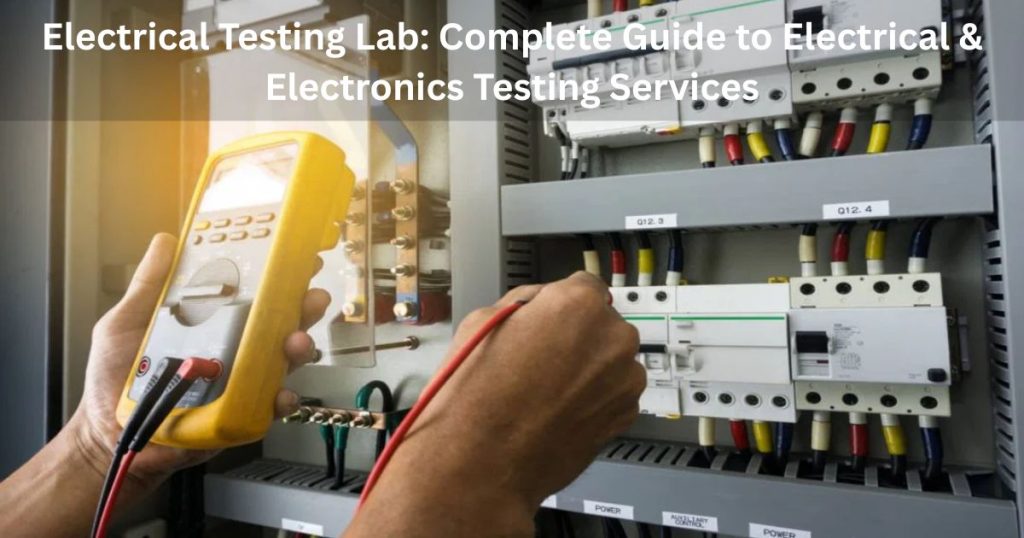
Electrical and electronic products power modern industries, homes, infrastructure projects, healthcare facilities, and commercial establishments. From industrial control panels and transformers to consumer electronics and electrical appliances, every product must meet safety, quality, and performance requirements before reaching the market. This is where a professional Electrical Testing Lab plays a critical role.
Testing is not just a regulatory requirement; it is an essential process that helps manufacturers, suppliers, contractors, and businesses ensure that their products operate safely and reliably under real-world conditions. A trusted Electronics and Electrical Testing Lab helps identify defects, verify compliance with industry standards, and improve overall product quality.
In this guide, we will explore the importance of electrical and electronics testing, the different testing services available, industry standards, and how to choose the right testing laboratory for your requirements.
What is an Electrical Testing Lab?
An Electrical Testing Lab is a specialized facility equipped with advanced instruments, testing equipment, and qualified professionals who evaluate the safety, functionality, durability, and performance of electrical and electronic products.
The primary objective of testing is to verify whether a product meets applicable standards, technical specifications, and regulatory requirements. Testing laboratories conduct various assessments that help manufacturers detect design flaws, improve product reliability, and reduce the risk of failure during operation.
Modern testing laboratories support a wide range of industries, including construction, manufacturing, energy, automotive, electronics, healthcare, telecommunications, and consumer goods.
A professional laboratory follows standardized testing procedures and maintains strict quality control practices to ensure accurate and reliable results.
Importance of Electrical and Electronics Testing
Electrical and electronic systems are expected to perform consistently under different operating conditions. Any defect or malfunction can lead to equipment failure, financial losses, operational downtime, or safety hazards.
Testing provides several important benefits:
Ensures Product Safety
Safety remains one of the most important aspects of any electrical product. Testing helps identify insulation weaknesses, leakage currents, overheating issues, and other risks that may cause accidents or electrical hazards.
Verifies Regulatory Compliance
Manufacturers must comply with national and international standards before launching products into the market. Testing verifies compliance and helps businesses meet certification requirements.
Improves Product Quality
Comprehensive testing reveals potential weaknesses during the development and production stages. Early detection allows manufacturers to make improvements before products reach customers.
Reduces Failure Risks
Products that undergo proper testing are less likely to fail in the field. This improves reliability and reduces warranty claims and maintenance costs.
Builds Customer Confidence
Customers prefer products that have been tested and validated by recognized laboratories. Independent testing enhances trust and strengthens brand reputation.
Types of Electrical Tests Performed
A qualified Electronics and Electrical Testing Lab performs various tests depending on product type, application, and regulatory requirements.
Insulation Resistance Testing
This test evaluates the effectiveness of insulation materials used in electrical equipment. Proper insulation prevents current leakage and protects users from electrical shock.
High Voltage (HV) Testing
High voltage testing determines whether equipment can safely withstand voltages higher than normal operating conditions. This assessment helps identify insulation breakdown risks.
Earth Continuity Testing
Earth continuity testing verifies that grounding systems function correctly and provide a safe path for fault currents.
Dielectric Strength Testing
This procedure measures the ability of insulation materials to resist electrical breakdown when exposed to high voltage.
Leakage Current Testing
Leakage current testing helps determine whether unintended electrical current flows through insulation or protective barriers.
Temperature Rise Testing
Electrical equipment generates heat during operation. Temperature rise testing evaluates thermal performance and ensures that products remain within safe operating limits.
Load Testing
Load testing assesses how electrical equipment performs under normal and peak operating conditions. This helps verify stability and performance.
Short Circuit Testing
Short circuit testing examines how a product behaves during fault conditions. It helps evaluate protective mechanisms and overall safety.
Functional Performance Testing
This testing verifies whether electrical and electronic products operate according to design specifications and intended functionality.
Environmental Testing
Products often operate in challenging environments. Environmental testing evaluates performance under varying temperatures, humidity levels, vibration, and other conditions.
Why Choose an Electrical Testing Lab in Noida?
Noida has emerged as one of India’s leading industrial and technology hubs. The region hosts numerous manufacturing facilities, electronics companies, infrastructure projects, and research organizations.
Choosing an Electrical Testing Lab in Noida offers several advantages.
Access to Advanced Testing Infrastructure
Many laboratories in Noida are equipped with modern testing instruments and advanced diagnostic equipment capable of handling diverse testing requirements.
Experienced Technical Professionals
Testing laboratories in the region employ skilled engineers, technicians, and quality experts with extensive experience across different industries.
Faster Turnaround Times
Proximity to industrial clusters helps businesses complete testing projects more efficiently and reduces logistical challenges.
Support for Compliance Requirements
Professional laboratories assist manufacturers in meeting industry standards, certification requirements, and regulatory obligations.
Comprehensive Testing Solutions
Organizations can access multiple testing services under one roof, improving efficiency and simplifying project management.
Convenient Location
Noida’s strategic location within the National Capital Region (NCR) makes it accessible to businesses across North India.
Industries Served
An established Electrical Testing Lab supports organizations operating in a wide range of sectors.
Construction and Infrastructure
Electrical systems used in commercial buildings, residential projects, and industrial facilities require thorough testing to ensure safety and performance.
Manufacturing Industry
Manufacturers depend on testing services to validate product quality and maintain compliance with applicable standards.
Power and Energy Sector
Power generation, transmission, and distribution equipment undergo extensive testing to ensure reliable operation.
Electronics Industry
Consumer electronics, industrial electronics, and electronic components require performance and safety validation before market release.
Automotive Sector
Modern vehicles contain sophisticated electrical and electronic systems that must meet strict quality and safety requirements.
Healthcare Equipment
Medical devices rely on precise electrical performance and require rigorous testing to ensure patient safety.
Telecommunications
Communication equipment must operate reliably under different environmental and operational conditions.
Consumer Products
Household appliances, electrical accessories, and consumer electronics undergo testing to verify safety and performance.
Testing Standards and Certifications
Reliable testing laboratories follow recognized standards and certification frameworks to ensure consistency and credibility.
NABL Accreditation
NABL (National Accreditation Board for Testing and Calibration Laboratories) accreditation demonstrates a laboratory’s technical competence and commitment to quality management practices.
BIS Standards
The Bureau of Indian Standards (BIS) establishes product safety and quality requirements for various electrical and electronic products.
IEC Standards
The International Electrotechnical Commission (IEC) develops globally recognized standards for electrical and electronic technologies.
IS Standards
Indian Standards (IS) define testing methods, safety requirements, and performance criteria applicable to different products.
ISO Quality Systems
Laboratories often operate under ISO-based quality management systems that support accuracy, reliability, and continuous improvement.
Following recognized standards helps ensure that testing results are accepted by customers, regulators, and certification bodies.
How to Select the Right Testing Laboratory
Choosing the right testing partner is essential for obtaining reliable results and maintaining compliance.
Verify Accreditation Status
Always check whether the laboratory holds relevant accreditations such as NABL. Accredited facilities follow established quality procedures and technical requirements.
Assess Technical Capabilities
Review the laboratory’s equipment, testing scope, and expertise to ensure they can support your specific requirements.
Evaluate Industry Experience
Experience within your industry often indicates a deeper understanding of applicable regulations, standards, and testing challenges.
Review Turnaround Time
Timely testing can significantly impact project schedules and product launches. Discuss expected timelines before initiating testing.
Check Reporting Quality
Clear, accurate, and detailed test reports are essential for compliance documentation and decision-making.
Consider Customer Support
Responsive communication and technical guidance contribute to a smoother testing process and better project outcomes.
Compare Service Scope
A laboratory offering comprehensive testing services can simplify coordination and reduce the need for multiple vendors.
The Growing Need for Professional Testing Services
As electrical and electronic technologies become increasingly sophisticated, the demand for professional testing continues to grow. Regulatory expectations are becoming stricter, while customers expect higher levels of quality, safety, and reliability.
Manufacturers who invest in comprehensive testing gain a competitive advantage by delivering products that meet industry requirements and perform consistently in real-world conditions.
Testing also supports innovation by helping organizations validate new designs, improve product performance, and reduce development risks.
Conclusion
A professional Electrical Testing Lab in Noida plays a vital role in ensuring the safety, reliability, and compliance of electrical and electronic products. Through advanced testing procedures, technical expertise, and adherence to recognized standards, laboratories help businesses deliver high-quality products to the market with confidence.
Whether you are a manufacturer, contractor, supplier, or product developer, partnering with a trusted Electronics and Electrical Testing Lab can help you meet regulatory requirements, improve product quality, and minimize operational risks. By selecting an accredited laboratory with proven expertise, organizations can strengthen customer trust and support long-term business growth in an increasingly competitive marketplace.