
Introduction
A textile product may look perfect on the production floor, but its real performance is tested only when it reaches the customer.
A garment that shrinks after washing, a fabric that loses colour quickly, or a material that tears during regular use can result in customer complaints, product returns, rejected export shipments, and loss of brand reputation. These issues not only affect profitability but can also damage long-term business relationships.
This is why quality verification has become an essential part of modern textile manufacturing.
Whether you manufacture fabrics, garments, home furnishing products, carpets, technical textiles, medical textiles, or industrial textile products, ensuring consistent quality is critical for success.
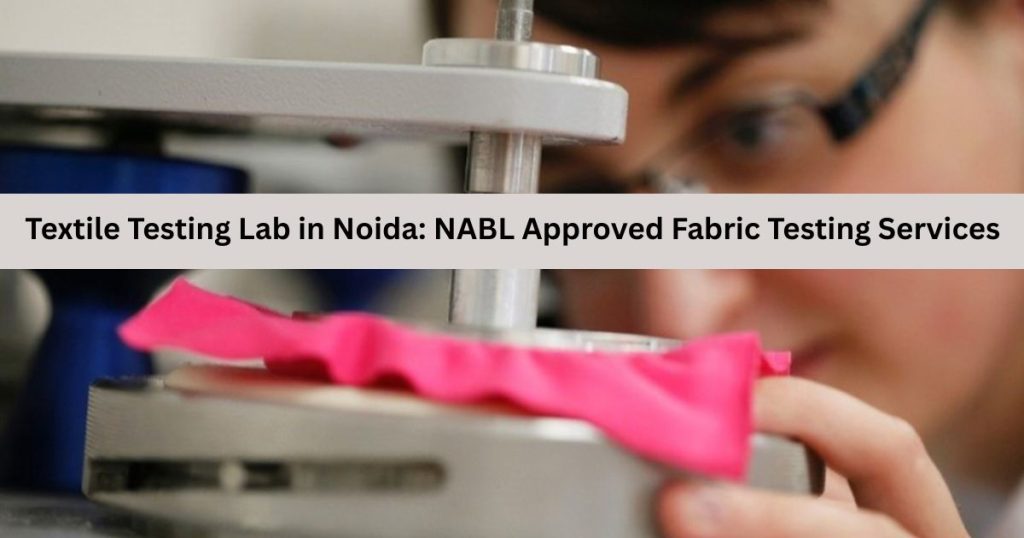
A professional Textile Testing Laboratory in Noida helps manufacturers, exporters, garment brands, and retailers evaluate the quality, durability, safety, and compliance of textile products before they reach the market.
At Stellar Test House, we provide reliable textile testing solutions that help businesses identify potential quality concerns early, improve product performance, and meet national as well as international requirements.
What is Textile Testing?
Textile testing is the scientific process of evaluating fabrics, yarns, garments, and other textile products to determine whether they meet specified quality standards and performance requirements.
Testing helps answer important questions such as:
- Will the fabric maintain its size after washing?
- Can the colour withstand repeated laundering?
- Is the material strong enough for its intended use?
- Does the product meet buyer specifications?
- Is the textile safe for consumer use?
Without laboratory testing, many of these issues remain hidden until products reach customers.
For manufacturers and exporters, identifying quality concerns before shipment can prevent costly product failures and improve customer satisfaction.
Why Textile Testing Matters in Today’s Market
Consumer expectations have increased significantly over the years.
Buyers now expect products that are durable, comfortable, safe, and consistent in quality.
A single quality issue can affect thousands of products and create significant financial losses.
Common Textile Quality Problems
| Quality Issue | Possible Impact |
|---|---|
| Fabric Shrinkage | Customer complaints and returns |
| Colour Fading | Negative customer experience |
| Fabric Tearing | Product failure during use |
| Inconsistent GSM | Production quality variations |
| Chemical Residues | Compliance issues |
| Poor Yarn Quality | Reduced fabric performance |
Testing helps manufacturers detect these problems before products reach the market.
Why Manufacturers and Exporters Choose Professional Testing
Many businesses view testing as an additional cost.
In reality, testing often saves significantly more money than it costs.
A failed export shipment, product recall, or customer complaint can be far more expensive than preventive testing.
Benefits of Textile Testing
- Improved product quality
- Reduced product returns
- Better customer satisfaction
- Compliance with buyer requirements
- Export readiness
- Consistent manufacturing quality
- Improved brand reputation
- Reduced production risks
Textile Testing Services Offered by Stellar Test House
As an experienced Textile Testing Lab in Noida, Stellar Test House supports manufacturers, exporters, garment brands, retailers, and industrial clients through comprehensive testing solutions.
Our testing capabilities cover:
- Fabric Testing
- Yarn Testing
- Garment Testing
- Colour Fastness Testing
- Chemical Testing
- Technical Textile Testing
- Home Furnishing Testing
- Medical Textile Testing
- Carpet and Floor Covering Testing
Mechanical and Physical Testing of Textiles
Physical performance testing helps determine how textile products behave during actual use.
A fabric may appear visually attractive, but only testing can confirm whether it can withstand stretching, tearing, pressure, and repeated usage.
Key Mechanical Tests
Breaking Load Testing
Breaking load testing measures the maximum force required to break a fabric.
This test is important for:
- Industrial textiles
- Uniforms
- Protective clothing
- Upholstery materials
Tear Resistance Testing
Tear resistance testing evaluates how well a fabric resists the spread of an existing tear.
This is particularly important for:
- Workwear
- Tents
- Automotive textiles
- Outdoor products
Bursting Strength Testing
Bursting strength helps determine the pressure required to rupture textile materials.
The test is widely used for knitted and non-woven fabrics.
GSM Testing
GSM testing measures fabric weight per square meter and helps manufacturers maintain consistency across production batches.
Dimensional Stability Testing
One of the most common complaints in the apparel industry is garment shrinkage after washing.
Dimensional stability testing helps determine how fabrics react to washing, soaking, and drying processes.
For example, a shirt may fit perfectly when purchased, but excessive shrinkage after the first wash can lead to customer dissatisfaction and product returns.
Testing helps manufacturers identify such issues before products reach consumers.
Yarn Testing: The Foundation of Fabric Quality
Fabric quality starts with yarn quality.
Even advanced manufacturing processes cannot compensate for poor-quality yarn.
Important Yarn Parameters
Linear Density
Determines yarn fineness and directly affects fabric appearance and performance.
Crimp Testing
Measures yarn waviness within the fabric structure.
Twist Testing
Evaluates the number of twists present in the yarn, influencing durability and strength.
Proper yarn testing helps ensure consistency during weaving and knitting operations.
Colour Fastness Testing
Colour quality is one of the first things customers notice in textile products.
Consumers expect colours to remain vibrant after repeated washing and regular use.
Important Colour Fastness Evaluations
- Colour Fastness to Washing
- Colour Fastness to Daylight
- Colour Fastness to Perspiration
- Colour Fastness to Organic Solvents
- Colour Fastness to Bleaching
These tests help manufacturers ensure long-term product appearance and customer satisfaction.
Chemical Testing for Safety and Compliance
Modern textile manufacturing involves dyes, chemicals, finishing agents, and processing treatments.
Chemical testing ensures products remain safe for consumers and comply with applicable standards.
Important Chemical Evaluations
- Fibre Identification
- Blend Composition Analysis
- Formaldehyde Testing
- pH Testing
- Moisture Content Analysis
- Chloride and Sulphate Testing
- Solvent Soluble Matter Analysis
These tests are especially important for export-oriented businesses and products intended for sensitive applications.
Textile Testing Standards Followed at Stellar Test House
To ensure accuracy and reliability, our Textile Testing Laboratory in Noida performs testing according to relevant Indian Standards and internationally accepted testing methods.
Common Textile Tests and Applicable Standards
| Testing Parameter | Applicable Standard |
|---|---|
| Breaking Load | IS 1969:2009 |
| Elongation | IS 1969:2009 |
| Tear Resistance | IS 6489:1993 |
| Bursting Strength | IS 1966:1975 |
| Flammability | IS 11871:1986 |
| Fabric GSM | IS 1964:2001 |
| Thread Count | IS 1963:1981 |
| Dimensional Change After Washing | IS 1313:1984 |
| Dimensional Change Without Agitation | IS 2977:1989 |
| Yarn Linear Density | IS 1315:1977 |
| Yarn Crimp | IS 3442:1980 |
| Yarn Twist | IS 832:2011 |
| Colour Fastness to Daylight | IS 686:1985, IS 2454:1967 |
| Colour Fastness to Washing | IS/ISO 105 C10:2006 |
| Colour Fastness to Perspiration | IS 971:1983 |
| Colour Fastness to Organic Solvents | IS 688:1988 |
| Colour Fastness to Bleaching | IS 762:1988 |
| Fibre Identification | IS 667:1981 |
| Chloride Content | IS 4202:1967 |
| Sulphate Content | IS 4203:1967 |
| Fatty Matter Content | IS 199:1989 |
| pH Value of Water Extract | IS 1390:1983 |
| Formaldehyde Content | IS 14563:1999 |
| Solvent Soluble Matter | IS 4390:2001 |
| Scouring Loss | IS 1383:1977 |
| Barium Activity Number | IS 1689:1973 |
Specialized Textile Product Testing
Beyond conventional fabrics and garments, many industries require specialized textile testing.
Products Covered
| Product Category | Standard |
|---|---|
| Automotive Non-Woven Carpet | IS 17757:2022 |
| Leisure Vehicle Textiles | IS 15272:2020 |
| Coir Matting and Carpets | IS 12503:2020 |
| Dyed Knitted Synthetic Fabrics | IS 17777:2021 |
| Nylon Carpets | IS 17478:2020 |
| Carpet Tiles | IS 19218:2023 |
| PVC/Latex Tufted Coir Mat | IS 17734:2022 |
| Camping Tents | IS 12989:2016 |
| Medical Textile Wipes | IS 17787:2021 |
| Medical Textile Under Pads | IS 17786:2022 |
| Cotton Bales | IS 12171:2024 |
| Country Jute Bags | IS 1912:2023 |
| Lightweight Jute Sacking Bags | IS 9113:2012 |
A Real-World Example: Why Testing Saves Businesses
Consider a garment exporter preparing a shipment for an international retailer.
The garments pass visual inspection and appear ready for dispatch.
However, pre-shipment laboratory testing identifies excessive colour bleeding during washing.
Without testing, the shipment could have been rejected by the buyer, resulting in significant financial losses.
Instead, the manufacturer corrected the dyeing process before shipment and successfully fulfilled the order.
This practical example demonstrates how professional testing protects both revenue and reputation.
Industries We Serve
Our testing solutions support multiple industries, including:
- Textile Manufacturers
- Garment Exporters
- Apparel Brands
- Home Furnishing Companies
- Automotive Textile Manufacturers
- Medical Textile Producers
- Technical Textile Manufacturers
- Carpet and Floor Covering Companies
- Government Procurement Agencies
Why Choose Stellar Test House?
Businesses searching for the Best Textile Testing Lab often look for more than just a test report.
They need reliable technical support, accurate results, and confidence in their quality decisions.
What Sets Us Apart
- Modern testing infrastructure
- Experienced technical team
- Industry-focused testing solutions
- Comprehensive testing coverage
- Timely reporting
- Support for exporters and manufacturers
- Commitment to quality and compliance
Conclusion
Quality is no longer a competitive advantage in the textile industry—it is an expectation.
Whether you manufacture fabrics, garments, carpets, technical textiles, or medical textile products, maintaining consistent quality is essential for long-term success.
A trusted Textile Testing Laboratory in Noida helps businesses reduce risks, improve product performance, meet compliance requirements, and strengthen customer confidence.
Through scientific testing, accurate reporting, and technical expertise, manufacturers can make informed decisions, prevent costly quality failures, and build stronger brands in domestic and international markets.
Frequently Asked Questions (FAQs)
What does a Textile Testing Laboratory do?
A Textile Testing Laboratory evaluates fabrics, yarns, garments, and textile products for quality, performance, durability, and compliance with applicable standards.
Why is textile testing important?
Textile testing helps identify quality issues before products reach customers, reducing returns, complaints, and shipment rejections.
What industries require textile testing?
Textile testing is commonly used by apparel manufacturers, exporters, retailers, home furnishing companies, automotive suppliers, and medical textile manufacturers.
What is GSM testing?
GSM testing measures fabric weight per square meter and helps manufacturers maintain consistency in fabric quality.
Why is colour fastness testing necessary?
Colour fastness testing ensures that textile products retain their appearance after washing, sunlight exposure, and regular use.
How do I choose a reliable Textile Testing Lab in Noida?
Look for technical expertise, testing scope, modern equipment, reporting accuracy, and experience serving textile manufacturers and exporters.