
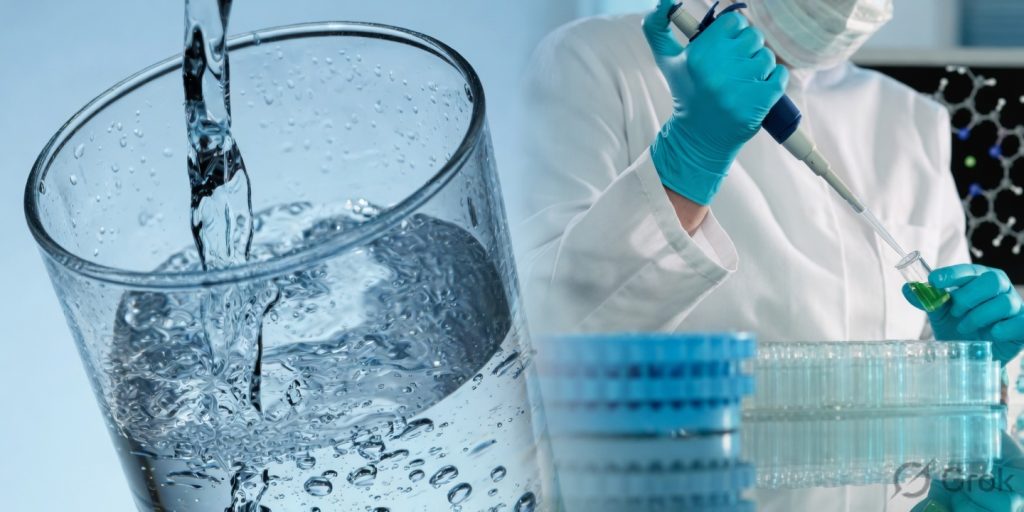
Water looks clean most of the time. Yet, the biggest water quality problems are often invisible.
A glass of water may appear crystal clear but still contain harmful bacteria, excessive fluoride, heavy metals, dissolved salts, or chemical contaminants. Similarly, water used in factories, construction projects, food processing plants, and agriculture can directly affect product quality, equipment life, crop productivity, and structural durability.
Many people assume that if water tastes normal, it is safe. In reality, several contaminants cannot be identified through taste, smell, or appearance. This is why professional laboratory testing plays a critical role in maintaining water quality and ensuring compliance with Indian standards.
At Stellar Test House, we provide NABL-accredited water testing services for residential, industrial, commercial, agricultural, and infrastructure projects. Our laboratory follows recognised testing procedures and delivers reliable reports that help clients make informed decisions about water safety and quality.
Why Water Testing Matters More Than Most People Realise
Water is used in almost every aspect of daily life and business operations. When its quality deteriorates, the consequences can be serious.
For households, contaminated water may cause health problems. For industries, poor-quality water can damage machinery and disrupt production. For builders, unsuitable water can weaken concrete structures. For farmers, excessive salts and contaminants can reduce crop yield and soil fertility.
Regular testing helps identify problems before they become expensive or dangerous.
Common Water Quality Issues Found During Testing
Laboratory analysis frequently detects:
- Bacterial contamination
- High Total Dissolved Solids (TDS)
- Excessive hardness
- Fluoride contamination
- Nitrate contamination
- Heavy metals
- Chlorides and sulphates
- Industrial pollutants
- Organic contamination
- pH imbalance
Many of these issues remain unnoticed until laboratory testing is performed.
Benefits of Professional Water Testing
Testing water is not only about compliance. It is about making better decisions.
Key Benefits
| Benefit | Why It Matters |
|---|---|
| Health Protection | Identifies harmful contaminants |
| Regulatory Compliance | Meets BIS and industry standards |
| Equipment Protection | Reduces corrosion and scaling |
| Construction Quality | Ensures concrete durability |
| Agricultural Productivity | Improves soil and crop management |
| Cost Savings | Prevents expensive failures and repairs |
| Product Quality | Supports manufacturing consistency |
A single water test can often reveal issues that may otherwise go unnoticed for months or even years.
NABL Accredited Water Testing Laboratory
When selecting a testing laboratory, accuracy is crucial.
A NABL accredited laboratory follows strict quality control procedures and standardized testing methods. Reports generated by accredited laboratories are widely accepted by industries, consultants, government departments, builders, manufacturers, and certification agencies.
At Stellar Test House, testing is performed using advanced analytical instruments and validated methodologies.
Our Testing Capabilities Include
- Physical analysis
- Chemical analysis
- Microbiological testing
- Heavy metal analysis
- Industrial water testing
- BIS standard compliance testing
- Specialized application-based water analysis
This ensures reliable results that clients can confidently use for quality assurance and decision-making.
Drinking Water Testing
Ensuring Safe Water for Everyday Consumption
Drinking water is one of the most frequently tested categories because it directly impacts human health.
Water supplied through municipal pipelines, borewells, tankers, overhead tanks, and storage reservoirs can become contaminated at multiple stages.
Even if the source water is safe, contamination may occur during storage or distribution.
Who Should Test Drinking Water?
Regular testing is recommended for:
- Homes and apartments
- Residential societies
- Schools and colleges
- Hospitals
- Hotels
- Restaurants
- Commercial buildings
- Manufacturing units
Parameters Commonly Tested
- pH
- Total Dissolved Solids (TDS)
- Hardness
- Chlorides
- Sulphates
- Fluoride
- Nitrate
- Iron
- Heavy metals
- Residual chlorine
- Total coliform bacteria
- E. coli
Testing is generally performed as per IS 10500 Drinking Water Standards.
Practical Example
A residential society recently reported unusual scaling in kitchen appliances and water heaters. Testing revealed extremely high hardness levels and elevated TDS. After installing appropriate treatment systems based on the laboratory findings, maintenance costs reduced significantly.
Borewell and Groundwater Testing
Understanding What Lies Beneath the Surface
Groundwater quality varies significantly depending on geological conditions and surrounding activities.
Industrial discharge, sewage infiltration, agricultural runoff, and natural mineral deposits can all affect groundwater quality.
Common Issues Found in Borewell Water
- High hardness
- Excessive TDS
- Fluoride contamination
- Nitrate contamination
- Iron presence
- Heavy metals
- Bacterial contamination
Why Regular Testing Is Important
Many households use borewell water for years without testing it. However, groundwater quality can change over time due to nearby construction, industrial development, or environmental changes.
Testing every six months helps identify emerging risks early.
Packaged Drinking Water Testing
Quality Assurance for Water Bottling Businesses
Consumers expect packaged drinking water to be safe and consistent. Manufacturers must therefore maintain strict quality control.
Testing is essential for:
- BIS certification
- Production quality monitoring
- Regulatory compliance
- Brand reputation
- Consumer safety
Testing Scope
Packaged drinking water testing may include:
- Chemical examination
- Microbiological analysis
- Heavy metal testing
- Mineral content analysis
- pH testing
- Taste and odor evaluation
- Residual disinfectant analysis
Testing is conducted as per applicable BIS requirements including IS 14543.
Why This Matters
A single quality failure can damage customer trust and create compliance challenges. Regular testing reduces these risks significantly.
Natural Mineral Water Testing
Protecting Source Integrity and Product Quality
Natural mineral water products require additional scrutiny because their unique mineral composition forms part of the product identity.
Testing helps verify:
- Source authenticity
- Mineral profile
- Microbiological safety
- Bottling quality
- Regulatory compliance
Important Parameters
- Calcium
- Magnesium
- Sodium
- Potassium
- Heavy metals
- Microbiological contaminants
- Chemical pollutants
Regular monitoring helps maintain product consistency from source to bottle.
Industrial Water Testing Services
Improving Operational Efficiency Through Water Quality Management
Water quality directly influences industrial performance.
Poor-quality water can cause corrosion, scaling, fouling, production interruptions, and premature equipment failure.
Industrial Applications We Serve
- Manufacturing plants
- Power plants
- Food industries
- Pharmaceutical units
- Chemical industries
- Engineering facilities
Types of Industrial Water Tested
Boiler Water
Boilers require carefully controlled water quality to prevent scale formation and efficiency losses.
Cooling Tower Water
Improper cooling water chemistry often leads to corrosion and microbiological growth.
Process Water
Many manufacturing processes require water that meets specific quality requirements.
RO and DM Water
Reverse Osmosis and Demineralized water systems require routine monitoring to maintain performance.
Real-World Impact
In many industrial facilities, routine water analysis helps identify scaling trends before they damage expensive heat exchangers and production equipment.
Construction Water Testing
Water Quality and Concrete Strength Are Closely Connected
Construction professionals often focus on cement, aggregates, and steel while overlooking water quality.
However, water used in concrete mixing and curing directly affects structural performance.
Risks of Poor Construction Water
Contaminated water may cause:
- Reduced concrete strength
- Reinforcement corrosion
- Surface defects
- Long-term durability issues
Parameters Evaluated
- pH
- Chlorides
- Sulphates
- Organic impurities
- Suspended solids
- Acidity
- Alkalinity
Testing is commonly performed according to IS 456 requirements.
Practical Scenario
A contractor working on a large infrastructure project planned to use nearby groundwater for concrete production. Laboratory testing detected elevated chloride levels. The issue was addressed before construction began, helping avoid future durability concerns.
Irrigation Water Testing
Supporting Better Agricultural Decisions
Farmers invest heavily in seeds, fertilizers, and irrigation systems. Yet many overlook water quality.
Poor irrigation water can gradually damage soil and reduce crop productivity.
Key Parameters
- Salinity
- Sodium absorption ratio
- Electrical conductivity
- pH
- Dissolved salts
Benefits of Testing
- Improved crop growth
- Better nutrient uptake
- Reduced soil degradation
- More efficient irrigation planning
- Long-term productivity improvement
Why Farmers Are Testing More Frequently
With changing groundwater conditions and increasing water scarcity, many agricultural operations now use water testing as part of their crop management strategy.
Swimming Pool Water Testing
Maintaining Hygiene and User Safety
Swimming pool water requires continuous monitoring.
Improper chemical balance can create health risks and affect swimmer comfort.
Important Parameters
- Residual chlorine
- pH
- Turbidity
- Hardness
- TDS
- Alkalinity
- Microbiological contamination
Facilities That Commonly Require Testing
- Hotels
- Clubs
- Schools
- Sports complexes
- Residential societies
Regular testing helps maintain safe and hygienic swimming conditions.
Water Testing for Food Processing Industries
Food Safety Starts with Water Quality
Water often becomes a direct ingredient in food and beverage production.
If water quality is compromised, product quality and consumer safety can also be affected.
Industries That Require Testing
- Dairy plants
- Beverage manufacturers
- Bakeries
- Packaged food units
- Commercial kitchens
- Frozen food facilities
Typical Analysis Includes
- Chemical testing
- Microbiological examination
- Heavy metal analysis
- Contamination screening
- Hygiene monitoring
Regular testing supports food safety programs and quality management systems.
Battery Water Testing
High-Purity Water for Industrial Performance
Battery manufacturing and related applications require highly purified water.
Even small impurities can affect battery performance and operational efficiency.
Parameters Tested
- Conductivity
- pH
- Chlorides
- Sulphates
- Silica
- Iron
- Total dissolved solids
Testing helps maintain product consistency and equipment reliability.
Reagent Grade Water Testing
Essential for Laboratories and Precision Applications
Research laboratories, pharmaceutical manufacturers, and analytical facilities rely on highly purified water.
Minor contamination can impact testing accuracy and product quality.
Why Testing Is Necessary
- Prevents contamination
- Improves analytical reliability
- Supports laboratory accuracy
- Maintains pharmaceutical quality standards
Testing is commonly performed for:
- Distilled water
- Purified water
- Deionized water
- Demineralized water
Common Water Quality Parameters Explained
| Parameter | Significance |
|---|---|
| pH | Indicates acidity or alkalinity |
| TDS | Measures dissolved solids |
| Hardness | Impacts scaling and usability |
| Chlorides | May contribute to corrosion |
| Sulphates | Affect taste and construction quality |
| Fluoride | Important for drinking water safety |
| Nitrate | High levels can create health concerns |
| Heavy Metals | Indicates toxic contamination |
| Coliform Bacteria | Suggests microbial contamination |
| E. coli | Indicates possible fecal contamination |
Understanding these parameters helps users make informed decisions about treatment and water management.
Industries We Serve
Stellar Test House supports a wide range of sectors, including:
- Residential societies
- Real estate projects
- Construction companies
- Manufacturing industries
- Food processing units
- Hotels and restaurants
- Hospitals
- Educational institutions
- Pharmaceutical companies
- Water treatment plants
- Packaged water manufacturers
- Agricultural businesses
Our testing solutions are designed to meet industry-specific requirements.
Why Choose Stellar Test House?
Choosing the right laboratory is as important as conducting the test itself.
NABL Accredited Testing
Reports generated through recognized quality systems.
Advanced Laboratory Infrastructure
Modern analytical equipment ensures accuracy and consistency.
Experienced Technical Professionals
Qualified experts interpret results and follow validated procedures.
Timely Reporting
Fast turnaround supports project schedules and operational needs.
BIS-Compliant Testing
Testing performed according to relevant Indian standards.
Sample Collection Support
Guidance and support for proper sample handling and transportation.
How Often Should Water Be Tested?
| Water Type | Recommended Frequency |
|---|---|
| Drinking Water | Every 6–12 months |
| Borewell Water | Every 6 months |
| Industrial Water | Monthly or Quarterly |
| Swimming Pool Water | Routine Monitoring |
| Construction Water | Before Project Use |
| Irrigation Water | Seasonal Testing |
Regular testing helps detect quality changes before they become major problems.
Frequently Asked Questions (FAQs)
1. What is the cost of water testing?
The cost depends on the type of water, number of parameters, and specific testing requirements. Basic drinking water analysis and comprehensive industrial testing packages differ in scope and pricing.
2. How long does a water testing report take?
Routine water testing reports are typically available within a few working days. Specialised analyses may require additional time depending on the parameters involved.
3. Why should I choose an NABL-accredited water testing lab?
NABL accreditation ensures that testing follows recognised quality standards, providing reliable and technically valid results accepted by industries and regulatory authorities.
4. How often should drinking water be tested?
For most households and commercial establishments, testing every 6–12 months is recommended. More frequent testing may be necessary if water quality concerns arise.
5. Can water quality affect concrete strength?
Yes. Excessive chlorides, sulphates, and organic impurities can negatively affect concrete durability, reinforcement protection, and long-term structural performance.
6. Is borewell water safe without testing?
Not always. Borewell water may contain fluoride, nitrates, iron, heavy metals, or bacterial contamination that cannot be identified without laboratory analysis.
Conclusion
Water quality affects far more than just drinking safety. It influences public health, industrial efficiency, construction durability, food quality, agricultural productivity, and regulatory compliance.
Because many contaminants cannot be detected through appearance, taste, or smell, laboratory testing remains the most reliable way to understand water quality and identify potential risks. Whether you are managing a residential property, industrial facility, construction project, agricultural operation, or packaged water plant, regular testing helps prevent problems before they become costly.
Stellar Test House provides NABL accredited water testing services backed by advanced laboratory capabilities, qualified technical expertise, and BIS-compliant testing methodologies. From drinking water and groundwater to industrial process water and construction applications, our testing solutions help you make confident, data-driven decisions about water quality.
For accurate water analysis, regulatory support, and dependable laboratory services, connect with Stellar Test House and ensure your water meets the standards your application demands.