
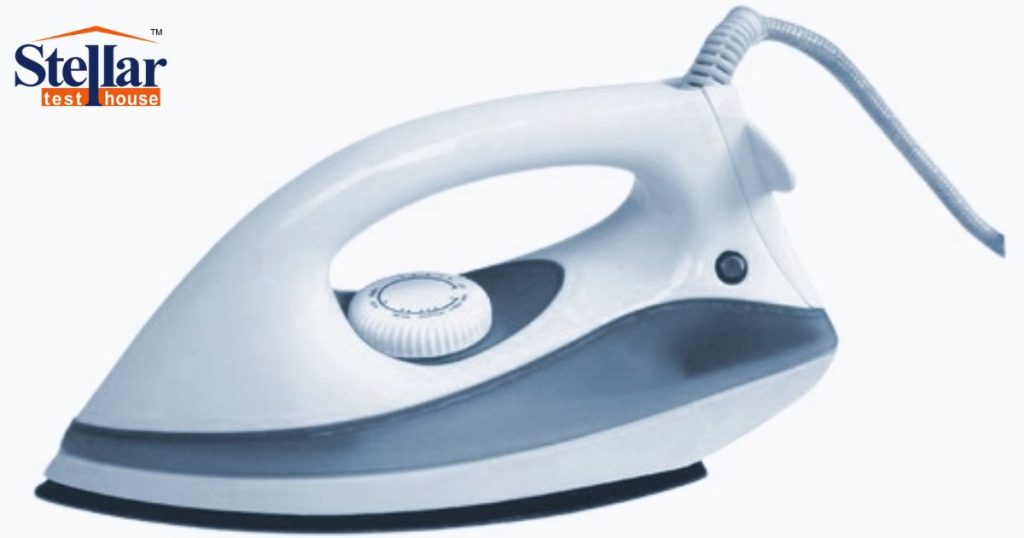
Electric irons are among the most commonly used household appliances. They operate at high temperatures and involve electrical components, which makes safety an important concern. To ensure safe usage and product reliability, electric irons must comply with specific safety standards before entering the market. One of the most important standards in India for this purpose is IS 302-2-3:2007+A1:2013.
The Electric Iron Safety Test IS 302-2-3 defines the safety requirements and testing procedures for electric irons used in domestic applications. This standard helps manufacturers, importers, and testing laboratories verify that electric irons meet the required safety benchmarks before they are sold to consumers.
Understanding IS 302-2-3 Standard
The IS 302 electric iron testing standard is part of the broader IS 302 series, which covers safety requirements for household and similar electrical appliances. Specifically, IS 302-2-3 focuses on the safety aspects of electric irons.
The standard outlines several technical tests designed to evaluate the electrical safety, heating behavior, insulation performance, and overall durability of the appliance. These tests ensure that the iron operates safely under normal conditions and does not pose a risk of electrical shock, overheating, or fire.
Manufacturers rely on IS 302-2-3 testing for electric iron to confirm that their products meet the safety expectations defined by Indian regulations.
Importance of Electric Iron Safety Testing
Electric irons generate significant heat and draw electrical power during operation. Without proper design and testing, they can create hazards such as electric shocks or overheating. This is why electric iron safety testing as per IS 302-2-3:2007+A1:2013 is essential.
Safety testing helps to:
- Ensure electrical protection for users
- Prevent overheating or fire hazards
- Verify insulation quality and durability
- Maintain product reliability and safety
- Support certification and regulatory compliance
Through IS 302-2-3 testing, manufacturers can demonstrate that their electric irons meet recognized safety requirements.
Key Tests Conducted Under IS 302-2-3
The Electric Iron Safety Test IS 302-2-3:2007 includes several technical evaluations that measure the performance and safety of the appliance. These tests are typically carried out in a professional electric iron safety testing laboratory equipped with specialized instruments.
1. Heating Test
This test evaluates how the electric iron behaves during normal heating conditions. The temperature of the sole plate and surrounding components is carefully monitored. Excessive temperature rise may indicate potential safety risks.
2. Insulation Resistance Test
The insulation resistance test ensures that electrical insulation between conductive parts is strong enough to prevent leakage current. During IS 302-2-3 testing, the insulation resistance is measured to confirm that the appliance provides adequate electrical protection.
3. Leakage Current Test
Leakage current testing checks whether unwanted electrical current flows through the appliance body. If the leakage exceeds acceptable limits, it could lead to electric shock hazards.
This test forms an important part of the BIS safety test for electric iron IS 302-2-3.
4. High Voltage Test
In this test, high voltage is applied to the appliance to evaluate insulation strength. The iron must withstand this condition without electrical breakdown. The procedure helps verify the long-term safety of the appliance.
5. Stability and Mechanical Safety Tests
Mechanical safety tests confirm that the iron remains stable during normal use. Components such as the handle, base, and internal connections are examined to ensure durability and safety.
These evaluations are commonly performed at an accredited IS 302-2-3 Testing Lab.
Role of Testing Laboratories
Testing laboratories play a crucial role in ensuring that electric irons meet the required safety standards. A professional electric iron safety testing laboratory uses advanced equipment and trained engineers to conduct accurate testing.
Manufacturers often rely on an experienced electric iron testing lab in India to evaluate their products before market release. These laboratories operate according to established procedures defined under IS 302-2-3 testing requirements.
By working with a recognized IS 302-2-3 Testing Lab, manufacturers gain reliable test reports that support product quality and safety verification.
BIS Safety Compliance for Electric Irons
In India, electrical appliances must comply with safety standards before they reach consumers. The BIS safety test for electric iron IS 302-2-3 plays an important role in this process. Compliance with this standard demonstrates that the appliance has been evaluated under strict safety guidelines.
Manufacturers who follow Electric iron safety testing as per IS 302-2-3:2007+A1:2013 ensure that their products meet the safety expectations of regulators and customers.
Conclusion
The Electric Iron Safety Test IS 302-2-3 is a critical standard that ensures electric irons operate safely and reliably. Through detailed technical evaluations such as heating tests, insulation checks, and electrical safety assessments, this standard verifies that appliances meet strict safety requirements.
Testing performed at a certified electric iron safety testing laboratory or electric iron testing lab in India helps manufacturers maintain product quality and consumer safety. By complying with IS 302-2-3:2007+A1:2013, companies can confidently deliver safe and dependable electric irons to the market.
Adhering to IS 302-2-3 testing requirements not only protects users but also strengthens trust in the quality of electrical appliances.