
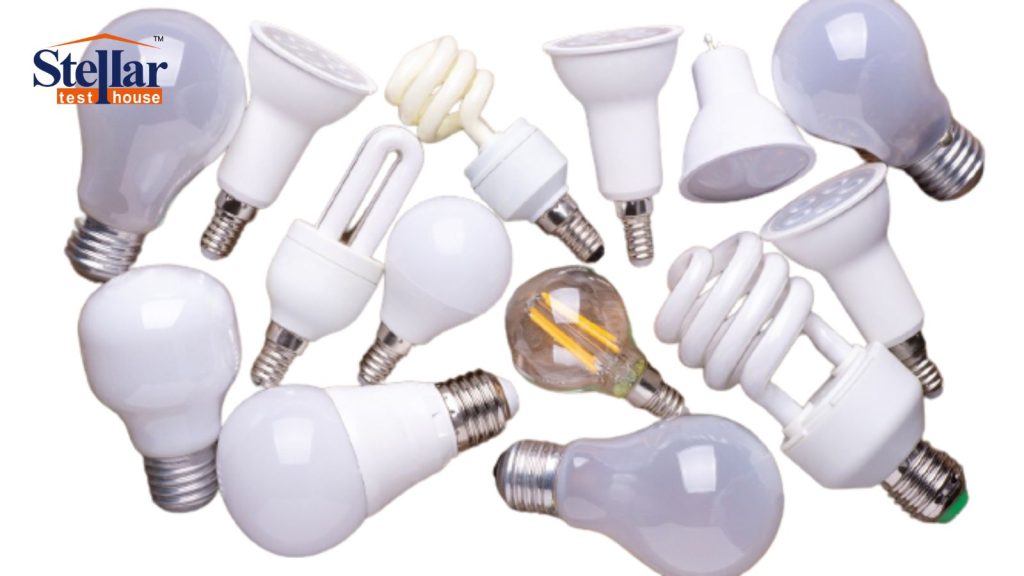
LED lighting has become the backbone of modern illumination in India. From homes and offices to commercial and industrial spaces, self-ballasted LED lamps are now the preferred choice because of their energy efficiency and long life. To maintain consistent quality and safety across the market, the Bureau of Indian Standards introduced IS 16102 Part 1 LED standard. This standard defines how LED lamps must be tested before they reach consumers.
Understanding this standard is essential for manufacturers who want smooth BIS approval and long-term market acceptance.
What Are Self-Ballasted LED Lamps?
Self-ballasted LED lamps are lighting products where the control gear is integrated within the lamp itself. Unlike traditional fluorescent lamps that rely on external ballasts, these LED lamps operate directly when connected to the supply.
Because these lamps are used extensively for general lighting, performance consistency and safety become critical. This is where IS 16102 LED lamp testing plays an important role.
Purpose of IS 16102 Part 1 LED Standard
The primary objective of IS 16102 Part 1 is to ensure that self-ballasted LED lamps:
- Deliver reliable light output
- Consume power efficiently
- Maintain performance over time
- Operate safely under normal conditions
By following the standard, manufacturers demonstrate compliance with national quality benchmarks and reduce the risk of product rejection or recall.
Key Requirements Covered Under IS 16102
Performance Parameters
LED lamp performance testing IS 16102 focuses on parameters such as luminous flux, efficacy, power consumption, and stability. These tests confirm whether the lamp performs as claimed on the label.
Electrical Safety
Safety checks ensure that the lamp does not pose electrical hazards during regular use. Proper insulation and stable operation are evaluated during testing.
Durability and Reliability
Self-ballasted LED lamps must maintain consistent performance over time. The standard ensures that sudden performance drops or premature failures do not occur.
All these evaluations are conducted in a controlled environment at a recognized IS 16102 LED lamp testing laboratory.
Importance of Testing at a Certified Laboratory
Testing must be carried out at a professional Self ballasted LED lamp testing lab that follows BIS-approved procedures. Accurate equipment, calibrated instruments, and trained personnel are essential for reliable test results.
A trusted BIS LED lamp testing lab provides detailed reports that are accepted during the certification process. These reports help manufacturers move faster through approvals and reduce compliance risks.
Why Choose an IS 16102 LED Lamp Testing Lab in Noida?
Noida has emerged as a preferred location for electrical and lighting product testing in India. An IS 16102 LED lamp testing lab in Noida offers several advantages:
- Easy access for North India manufacturers
- Faster coordination and testing timelines
- Experienced professionals familiar with BIS processes
- Reliable documentation and technical support
Manufacturers often prefer Noida-based laboratories for efficient compliance and reduced logistical challenges.
Role of BIS Certification in Market Acceptance
IS 16102 compliance is closely linked with BIS certification. Products tested under the IS 16102 Part 1 LED standard gain higher trust among distributors, institutional buyers, and government agencies.
Certification assures buyers that the lamp meets performance and safety expectations. Over time, this trust translates into stronger brand value and repeat business.
Common Mistakes Manufacturers Should Avoid
Many products fail testing due to avoidable issues such as inaccurate labeling, inconsistent performance claims, or inadequate thermal design. Early consultation with an IS 16102 LED lamp testing laboratory helps identify gaps before formal testing begins.
Corrective actions taken at the design stage save time, cost, and re-testing efforts.
Conclusion
IS 16102 Part 1 is more than a regulatory requirement. It acts as a quality framework that ensures self-ballasted LED lamps deliver safe, efficient, and reliable lighting to consumers across India.
By working with a professional Self ballasted LED lamp testing lab, manufacturers can confidently meet BIS requirements and strengthen their market presence. Proper testing is not just about compliance—it is about building trust, consistency, and long-term success in the lighting industry.