
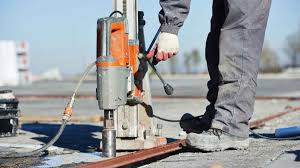
Concrete is the backbone of every structure — from bridges to skyscrapers. But even the strongest concrete can deteriorate over time due to weathering, load, or poor workmanship.
That’s where Non-Destructive Testing (NDT) comes in.
Concrete NDT allows engineers to assess the quality, strength, and durability of concrete without damaging it. These tests are crucial for inspection, maintenance, and rehabilitation of existing structures.
In this article, we’ll explore the top 7 Non-Destructive Tests for concrete, their methods, procedures, and why they matter.
1. Rebound Hammer Test
The Rebound Hammer Test (also known as the Schmidt Hammer Test) is one of the most common and simplest Concrete NDT methods.
Purpose:
To estimate the compressive strength and surface hardness of concrete.
Method / Procedure:
- A spring-loaded hammer is pressed against the concrete surface.
- When released, it impacts the surface and rebounds.
- The rebound distance is measured as a Rebound Number, which indicates surface hardness.
- Using calibration charts, engineers can estimate compressive strength.
Significance:
- Quick and cost-effective
- Portable and easy to use on-site
- Best suited for preliminary strength assessments
Note: The test is influenced by surface texture and moisture, so results should be cross-checked with other Concrete NDT methods.
2. Ultrasonic Pulse Velocity (UPV) Test
The Ultrasonic Pulse Velocity Test is a reliable method to assess concrete uniformity, cracks, and internal defects.
Purpose:
To measure the quality, density, and homogeneity of concrete.
Method / Procedure:
- Transducers are placed on opposite sides of the concrete member.
- An ultrasonic pulse is transmitted through the concrete.
- The time taken for the pulse to travel is measured.
- Velocity is calculated as Distance ÷ Time.
Significance:
- High pulse velocity = good quality concrete
- Detects cracks, voids, and deterioration zones
- Helps evaluate structural integrity in bridges, columns, and slabs
The Ultrasonic Pulse Velocity Test is often used with the Rebound Hammer Test to improve accuracy.
3. Pile Integrity Test (PIT)
When it comes to deep foundations, ensuring the soundness of piles is essential. The Pile Integrity Test helps detect defects in concrete piles without excavation.
Purpose:
To identify cracks, voids, or discontinuities in pile shafts.
Method / Procedure:
- A small impact is applied to the pile head using a hammer.
- The reflected stress wave is recorded using a sensor.
- The shape of the reflected wave indicates the presence of any defect.
Significance:
- Non-invasive and quick
- Detects pile length and cross-section irregularities
- Essential for quality assurance during pile installation
The Pile Integrity Test is a vital Concrete NDT method for foundation safety assessment.
4. Half Cell Potential Difference Test
Corrosion of steel reinforcement is one of the most common causes of concrete deterioration. The Half Cell Potential Difference Test helps evaluate the probability of corrosion activity in reinforced concrete structures.
Purpose:
To assess corrosion risk in steel reinforcement without damaging the concrete.
Method / Procedure:
- A copper-copper sulfate reference electrode is connected to the reinforcement steel.
- A voltmeter measures the electrical potential difference between the electrode and steel.
- The potential readings indicate corrosion likelihood.
Significance:
- Helps in maintenance and repair planning
- Determines zones at risk of corrosion
- Often used with Carbonation Test for better accuracy
This Concrete NDT test is widely used in bridge decks, marine structures, and parking garages.
5. Carbonation Test
The Carbonation Test determines the depth of carbonation — a chemical process that reduces the alkalinity of concrete and makes steel reinforcement susceptible to rust.
Purpose:
To measure the depth of carbonation and assess the durability of concrete.
Method / Procedure:
- A fresh concrete surface is exposed by drilling or breaking.
- Phenolphthalein indicator solution is sprayed on the surface.
- Areas with high pH turn pink; non-carbonated zones remain colorless.
- The depth from surface to color change is the carbonation depth.
Significance:
- Indicates corrosion risk
- Assists in selecting repair techniques and protective coatings
- Helps evaluate long-term durability
The Carbonation Test, when combined with Half Cell Potential Difference Test, gives a complete picture of corrosion potential.
6. Cover Depth Test
Concrete cover protects reinforcement bars from corrosion and fire. The Cover Depth Test ensures that the reinforcement has the required cover as per design standards.
Purpose:
To measure the thickness of concrete cover over rebar.
Method / Procedure:
- A cover meter or rebar locator is used.
- The device detects steel using electromagnetic induction.
- The reading shows the exact cover depth and bar location.
Significance:
- Verifies construction quality and adherence to codes
- Identifies areas with inadequate cover
- Essential for retrofitting and durability evaluation
Regular Cover Depth Tests are part of preventive maintenance for concrete structures.
7. Crack Depth Measurement
Cracks are the most visible signs of distress in concrete structures. The Crack Depth Measurement test helps determine whether cracks are superficial or structural.
Purpose:
To measure the depth and width of cracks in concrete.
Method / Procedure:
- Ultrasonic or optical methods are used.
- Ultrasonic pulses are sent across the crack, and travel time is measured.
- The data is analyzed to calculate crack depth.
Significance:
- Helps differentiate between surface and deep cracks
- Crucial for repair design and safety evaluation
- Non-destructive and precise
Combined with Ultrasonic Pulse Velocity Test, it provides an accurate understanding of internal damage.
Why Non-Destructive Testing Matters
Non-Destructive Testing of concrete plays a vital role in today’s construction industry. It offers numerous advantages:
- Ensures structural safety without damage
- Saves time and cost compared to destructive testing
- Enables early detection of problems
- Extends the life of structures through preventive maintenance
From bridges and dams to high-rises, Concrete NDT techniques ensure that our built environment remains strong, safe, and sustainable.
Conclusion
The top 7 Non-Destructive Tests for Concrete — including the Rebound Hammer Test, Ultrasonic Pulse Velocity Test, Pile Integrity Test, Half Cell Potential Difference Test, Carbonation Test, Cover Depth Test, and Crack Depth Measurement — form the backbone of modern concrete evaluation.
Each method offers unique insights into the condition and strength of concrete without causing any damage.
By using a combination of these Concrete NDT methods, engineers can make better decisions, improve safety, and ensure long-lasting structures.